
- Consent
from PCB
- Annual
Return Filing
- Complete Documentations
- Company
Registration
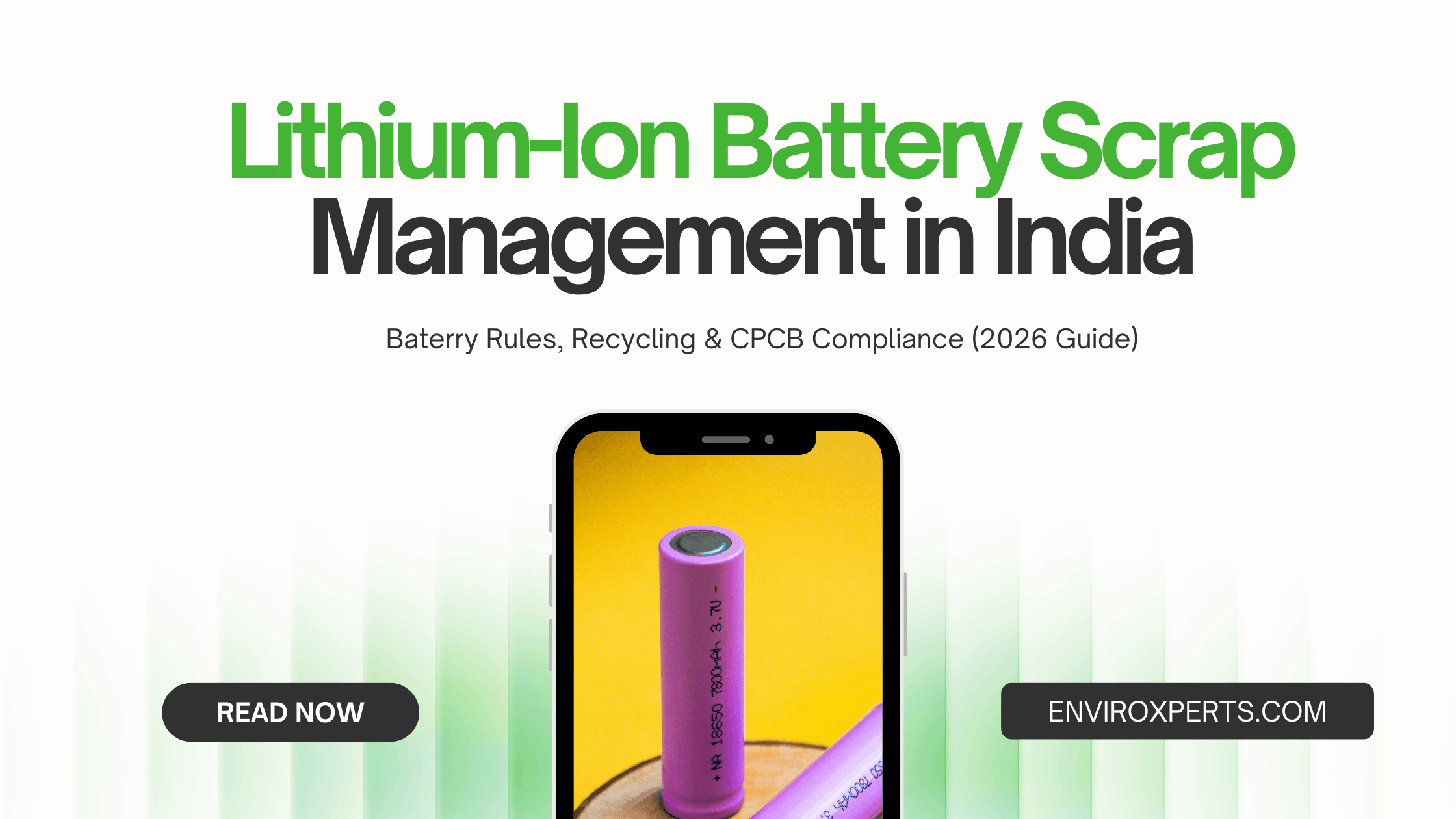
Lithium-ion batteries have become a crucial part of modern technology. They are widely used in electric vehicles, smartphones, laptops, energy storage systems, and many other electronic devices. As the usage of these batteries increases, the amount of lithium-ion battery scrap is also growing rapidly.
Improper disposal of lithium battery waste can create serious environmental and safety risks such as chemical leakage, fire hazards, and soil contamination. To address these concerns, India has introduced specific regulations and compliance requirements for battery waste management. Businesses involved in manufacturing, importing, recycling, or handling lithium batteries must follow these rules to ensure safe disposal and resource recovery. If you need guidance regarding Lithium-Ion Battery Scrap Management licenses, compliance, or regulatory approvals, Enviroxperts can assist you as a consultant in navigating the process smoothly.
This guide explains the rules, recycling process, and compliance requirements for lithium-ion battery scrap management in India in 2026.
Understanding Lithium-Ion Battery Scrap
Lithium-ion battery scrap refers to batteries that have reached the end of their life cycle or are no longer usable. These batteries may come from different sources such as electric vehicles, electronic devices, solar storage systems, and industrial equipment.
When batteries become damaged or depleted, they are classified as waste and must be handled carefully. Lithium batteries contain valuable metals like lithium, cobalt, nickel, and copper. If properly recycled, these materials can be recovered and reused in new battery production.
However, if these batteries are disposed of incorrectly, they can release harmful chemicals into the environment. That is why proper waste management and recycling are essential.
Importance of Proper Lithium Battery Waste Management
Managing lithium battery scrap responsibly is important for both environmental protection and resource conservation.
First, lithium batteries contain chemical compounds that can contaminate soil and water if dumped in landfills. Second, damaged batteries may cause fires or explosions when exposed to heat or pressure. Third, many of the metals used in lithium batteries are limited natural resources that should be recovered instead of wasted.
Recycling lithium batteries helps reduce environmental pollution, supports the circular economy, and decreases the need for mining new raw materials.
Battery Waste Management Rules in India
To regulate battery waste, the Government of India introduced the Battery Waste Management Rules, 2022. These rules apply to all types of batteries, including lithium-ion batteries used in electronics, vehicles, and industrial systems.
The main objective of these rules is to ensure that waste batteries are collected, recycled, and disposed of in an environmentally safe manner.
The regulations also promote a system where producers and importers are responsible for managing the waste generated from the batteries they introduce into the market.
Extended Producer Responsibility (EPR)
One of the key concepts introduced in the battery waste rules is Extended Producer Responsibility (EPR).
Under this system, battery producers, manufacturers, and importers must take responsibility for collecting and recycling used batteries. They are required to ensure that a certain percentage of the batteries sold by them are collected and processed through authorized recyclers.
This approach ensures that companies remain accountable for the environmental impact of their products even after the batteries reach the end of their life.
Compliance Requirements for Businesses
Businesses involved in lithium battery production, import, or recycling must follow several compliance requirements.
They need to obtain EPR registration from the Central Pollution Control Board (CPCB) before selling or importing batteries in India. Companies must also maintain records of the batteries they introduce into the market and ensure that recycling targets are achieved every year.
Waste batteries must be transferred only to authorized recycling facilities that follow environmental safety standards. In addition, companies may need approvals from State Pollution Control Boards for handling and processing battery waste.
Failure to comply with these regulations can result in financial penalties and regulatory action.
Lithium-Ion Battery Recycling Process
Recycling lithium-ion batteries involves several technical steps designed to safely recover valuable materials.
The process usually begins with the collection of used batteries from different sources such as EV manufacturers, electronics companies, and waste management channels. After collection, the batteries are discharged and dismantled to remove external components.
The battery cells are then processed through shredding and separation technologies to extract materials known as “black mass,” which contains important metals.
Advanced chemical or hydrometallurgical processes are used to recover lithium, cobalt, nickel, and other metals. These materials can then be reused in the production of new batteries, reducing the demand for fresh mining.
Challenges in Lithium Battery Scrap Management
Despite regulatory frameworks, the lithium battery recycling sector still faces several challenges.
Many batteries are handled by informal scrap markets that may not follow safe disposal practices. There is also limited awareness among consumers regarding proper battery disposal.
Another challenge is the high investment required to set up advanced recycling facilities. Lithium battery recycling technologies require specialized equipment and strict safety measures.
However, with the rapid growth of electric vehicles and renewable energy systems, investments in battery recycling infrastructure are increasing in India.
Future of Lithium Battery Recycling in India
India’s transition toward electric mobility and renewable energy will significantly increase the demand for lithium batteries. As these batteries reach the end of their life cycle, efficient recycling systems will become even more important.
The government is encouraging the development of recycling technologies and resource recovery industries. Over time, recycled battery materials may become a key source of raw materials for future battery manufacturing.
This shift will help India build a sustainable battery ecosystem while reducing environmental impact.
Why Choose Enviroxperts Consultant?
Managing lithium-ion battery scrap and complying with environmental regulations can be complex for businesses. Enviroxperts Consultant helps companies navigate the regulatory process with expert guidance on licenses, approvals, and environmental compliance related to battery waste management. Our team supports businesses in understanding CPCB regulations, documentation, and compliance requirements, ensuring a smoother and more efficient approval process. With industry knowledge and practical experience, Enviroxperts aims to simplify regulatory challenges so businesses can focus on sustainable operations.
Conclusion
Lithium-ion battery scrap management is becoming an essential part of India’s environmental and industrial policies. Proper collection, recycling, and regulatory compliance are necessary to minimize environmental risks and maximize resource recovery.
By following CPCB guidelines and the Battery Waste Management Rules, businesses can contribute to safer waste handling practices and support the development of a circular economy for battery materials.
As lithium battery usage continues to grow, responsible recycling and compliance will play a critical role in building a cleaner and more sustainable future.
Related Blogs
Who are Enviroxperts and How They Help Businesses with Environmental Compliances?
Read More
How to Get an E-Waste License in India? A Complete Guide
Read More
Complete Guide to EPR Registration in India
Read More
How to Import Scrap Batteries in India and its Rules, License & Compliance Guide
Read More
How Registered Vehicle Scrapping Facility (RVSF) works in India
Read More
What EPR E waste Management rules says
Read More
What Tyre Waste Management Rules Says
Read More
What is EPR Battery
Read More