
- Consent
from PCB
- Annual
Return Filing
- Complete Documentations
- Company
Registration
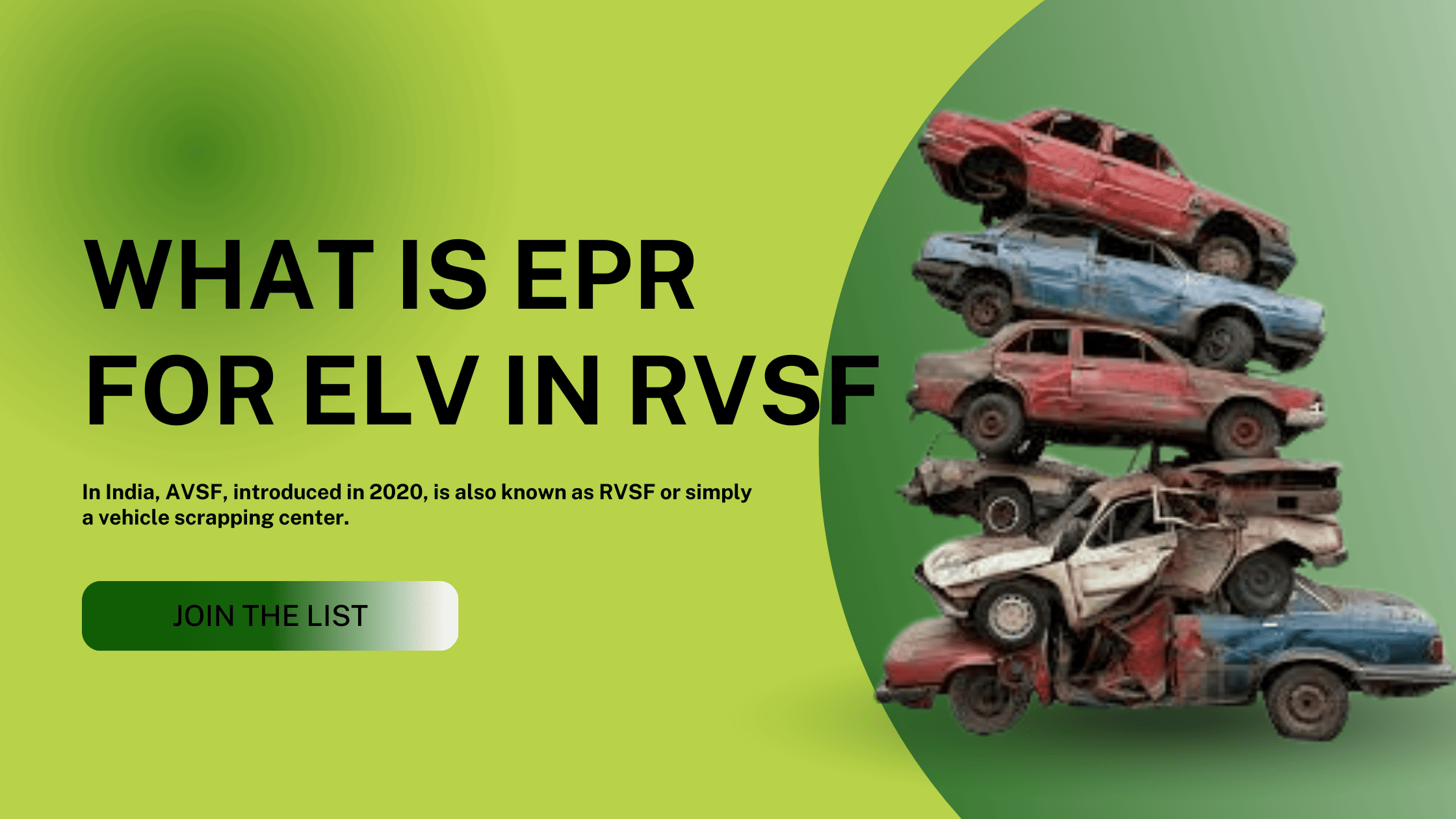
In India, the AVSF (Authorized Vehicle Scrapping Facility) was introduced in 2020, later also known as RVSF (Registered Vehicle Scrapping Facility) or simply a vehicle scrapping center. Under this policy, the Ministry of Environment, Forest and Climate Change (MOEF), the Central Pollution Control Board (CPCB), the State Pollution Control Boards (SPCB), and the Ministry of Road Transport & Highway (MORTH) collaborated to define a policy stating that all vehicles older than 10 or 15 years (this includes four-wheelers, cars, trucks, buses, and even used military vehicles – any movable vehicle that runs) must be scrapped. The licensed RVSF facilities are required to segregate and remove various components from these vehicles, including e-waste, plastics, tires, batteries, metal scraps, glass, wood, and used oil. This waste must then be sent to authorized recyclers for proper recycling.Now recently, EPR (Extended producer responsibility) has introduced under the RVSF by CPCB. Central Pollution Control Board shall issue the EPR certificate through the centralised online portal in favour of the RVSF. CPCB will develop mechanism for such exchange on the centralised online portal. For getting the RVSF license or for getting the EPR license in RVSF an individual or company can connect Enviroxperts team. Our team will help and consult you in filling part and assist you in compliance consulting services.
How RVSF get benefits
The benefit of this policy is that the iron, copper, aluminum, steel, any ferrous or non ferrous metal scrap , e-waste, plastics scrap, and tires extracted from these 15-year-old vehicles & will be sold at current market rates (based on MCX or other prevailing rates) to authorized recyclers or manufacturers. This will generate GST revenue for the government, which can be utilized for national development. Furthermore, these recycled materials can be given a new form and used in future infrastructure development projects.
Under the RVSF policy, E-waste Management Rules, Battery Waste Management Rules, Plastic Waste Management Rules, and Tire Management Rules were introduced.
All these waste management rules were linked to the RVSF policy, and it was stipulated that when a vehicle is scrapped or dismantled by an RVSF (Registered Vehicle Scrapping Facility), all the e-waste, plastic, batteries, used oil and tires extracted from it must be given to authorized recyclers under Hazardous Waste Management rules. This ensures that these wastes are recycled properly by a recycling center under E waste , Plastic and Tyre waste Management rules. For more understading of Waste Management rules you can connect Enviroxperts team.
What is EPR in End of Life Vehicles
Recently, the Extended Producer Responsibility (EPR) was introduced under the RVSF policy. Under this, it was mandated that an RVSF must obtain an EPR certificate from the Central Pollution Control Board. Furthermore, all producers or manufacturers in India who manufacture vehicles or import vehicles into India are required to scrap a certain number of vehicles and supply the resulting steel scrap to manufacturers through RVSFs. These manufacturers will then use the steel as a raw material for recycling or reuse.
Under this framework, the Ministry of Environment, Forest and Climate Change and the Central Pollution Control Board have jointly defined an annual target for the amount of steel scrap that must be extracted from scrapped vehicles and supplied to steel rolling mills or manufacturing plants.These targest must be fulfilled on annual basis by a Registered Vehicle Scrapping Facility.
Inspection Process in RVSF
The RVSF policy also states that once a plant is fully established and operational, the Ministry of Environment, Forest and Climate Change and the Central Pollution Control Board can audit or can assign an agency for RVSF plant audit. They can conduct audits or inspections at any vehicle scrapping center at any time, not necessarily only after 6 or 12 months, and can obtain data on the vehicles scrapped by that center. Therefore, under the RVSF policy, a vehicle scrapping center must maintain records of the waste generated after properly dismantling each vehicle.
The Central Pollution Control Board may undertake or cause to be undertaken by an authorised agency the periodic inspection and audit of the Registered Vehicle Scrapping facility, including information from GST, Network portal, to ensure that such facility is complying with the requirement under the provisions of these rules.
EPR Registration for ELV in RVSF
As per the latest regulatory updates, the Government of India and Central Pollution Control Board (CPCB) have introduced EPR registration for Registered Vehicle Scrapping Facilities (RVSF) under the End-of-Life Vehicles (ELV) framework. RVSF units are now required to register on the CPCB EPR portal, meet assigned targets, and maintain complete records of scrap channelization to authorized recyclers.
For detailed guidance on compliance, eligibility, and registration process, RVSF operators can refer to the updated guide on EPR registration for RVSF under ELV rules in India.
How Enviroxperts can help
An individual or a company who want to start the business in setting RVSF plant or a Registered vehicle scrapping plant as per the vehicle scrapping policy defined MORTH & CPCB can connect with Enviroxperts team. Our team will help you in explaining the rules , land requirements , Procedure , Consutling , and support you in fullfilling the licensing or compliances part for the RVSF.
Frequently Asked Questions (FAQs)
What is an RVSF and what is its main purpose?
An RVSF (Registered Vehicle Scrapping Facility) is an authorized vehicle scrapping center where end-of-life vehicles that are 10–15 years old are dismantled in an environmentally safe and regulated manner. The primary purpose of an RVSF is to reduce pollution, promote scientific recycling of vehicle components, and eliminate illegal vehicle dismantling practices.
Is an EPR certificate mandatory for an RVSF?
Yes, as per CPCB guidelines, it is mandatory for every RVSF to obtain an Extended Producer Responsibility (EPR) certificate. The EPR framework ensures proper tracking of vehicle scrapping, steel recovery, and waste disposal through a centralized online portal.
What happens to the waste generated after vehicle scrapping?
Under the RVSF policy, all waste generated after vehicle dismantling, including e-waste, plastic, batteries, tyres, used oil, and metal scrap—must be transferred only to authorized recyclers. This ensures compliance with applicable waste management rules and environmentally sound recycling.
Related Blogs

Who are Enviroxperts and How They Help Businesses with Environmental Compliances?
Read More
How to Get an E-Waste License in India? A Complete Guide
Read More
Complete Guide to EPR Registration in India
Read More
How to Import Scrap Batteries in India and its Rules, License & Compliance Guide
Read More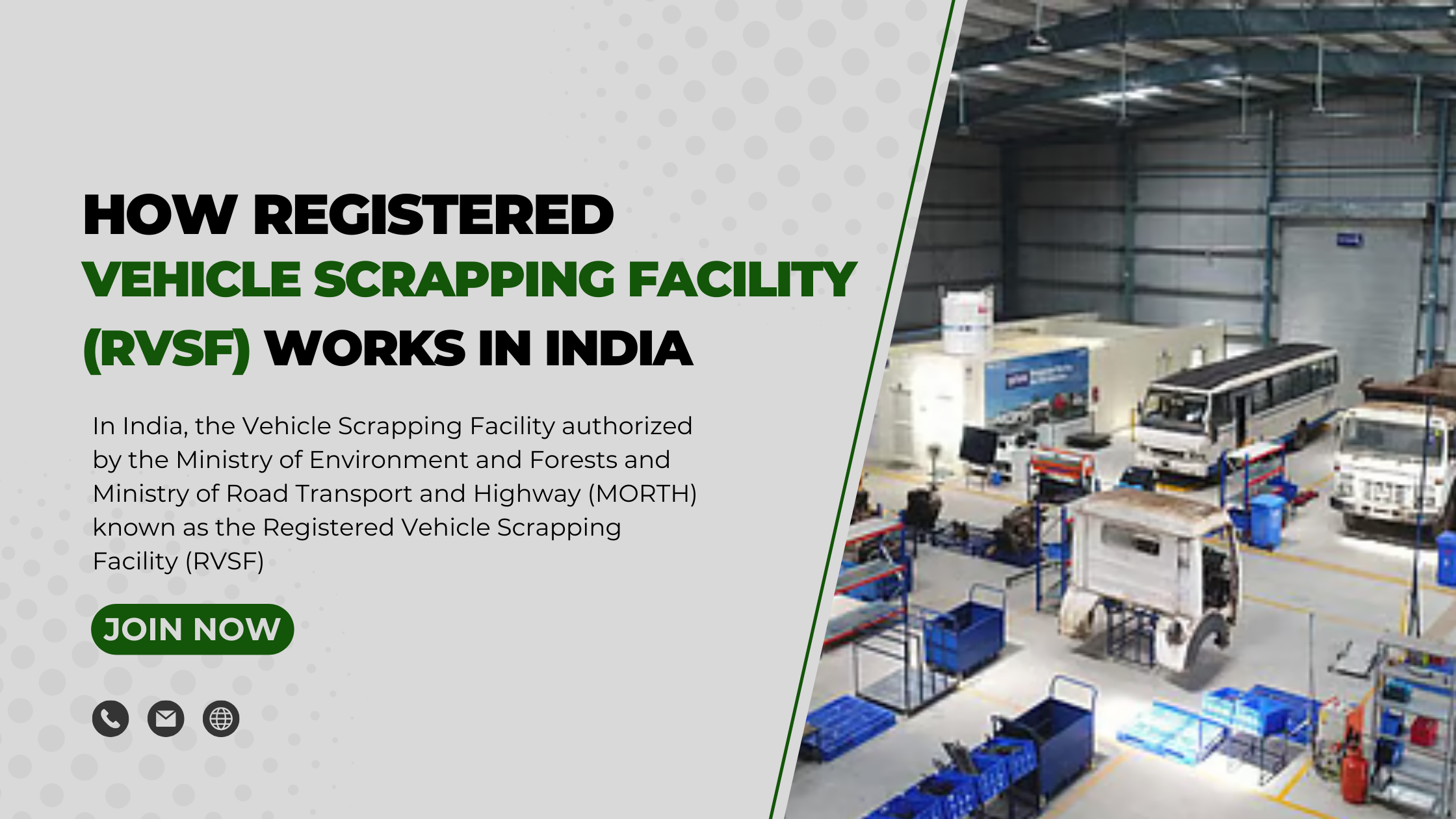
How Registered Vehicle Scrapping Facility (RVSF) works in India
Read More
What EPR E waste Management rules says
Read More
What Tyre Waste Management Rules Says
Read More
What is EPR Battery
Read More