- Consent
from PCB
- Annual
Return Filing
- Complete Documentations
- Company
Registration
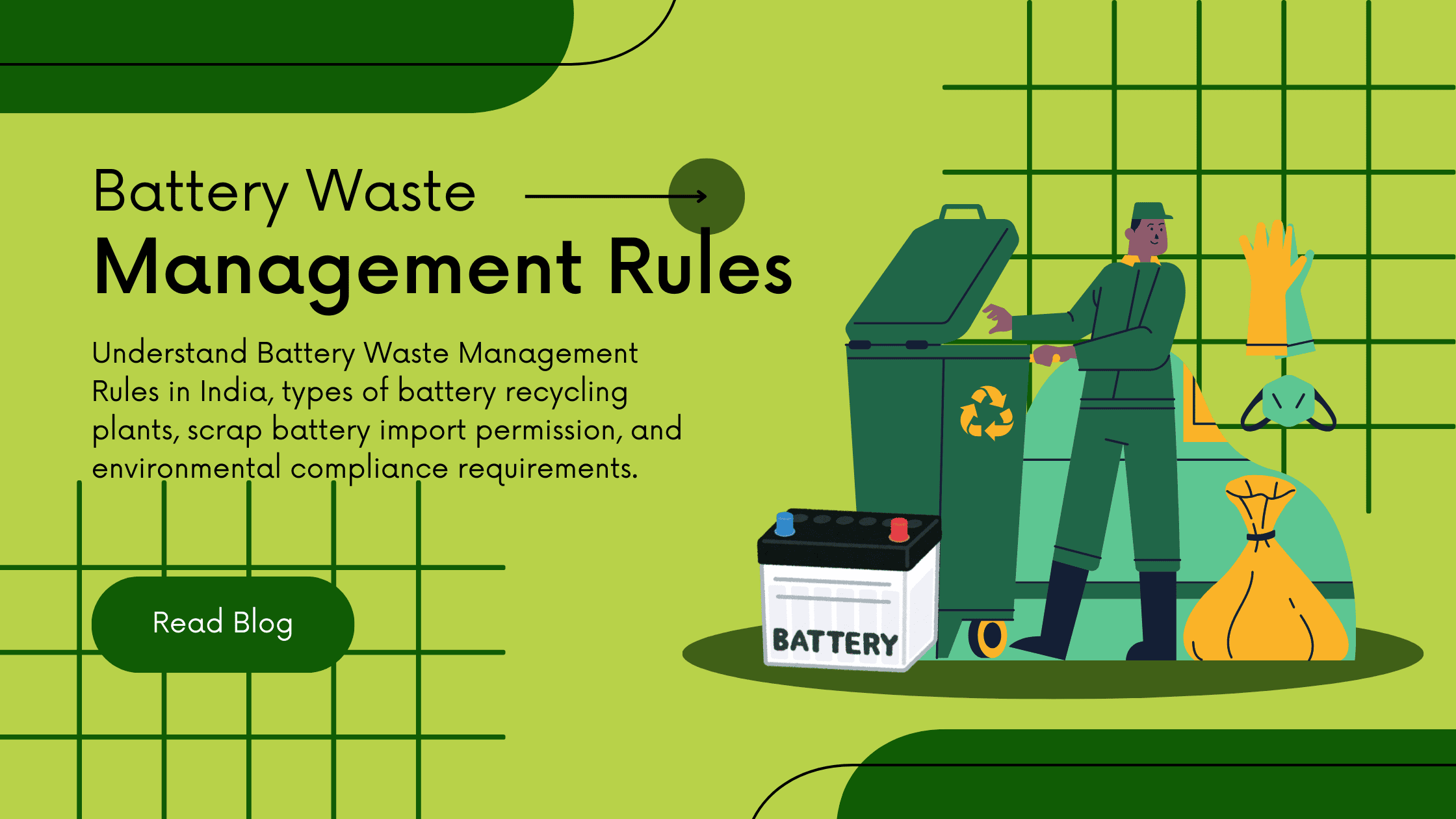
Under India's Battery Waste Management Rules, two types of batteries are discussed: lead-acid batteries and lithium-ion batteries. Recycling plants for both types of batteries have been established in India.
Types of Battery Recycling Plant
For lead-acid batteries, a recycling plant can be set up using the smelting process. Through this process, lead can be extracted, opening up business opportunities. This extracted lead can either be exported or sold in the Indian market, where there is a demand for it.
The second type is lithium-ion scrap batteries. A lithium-ion battery recycling plant can be established, where the batteries are crushed to extract aluminum, copper, and black mass. All three products are sold as raw materials in India. Alternatively, through a hydrometallurgical process, various precious metals such as nickel, cadmium, manganese, and many others can be extracted from the black mass. These raw materials can also be sold in India or exported.
Scrap Battery Import Permission and benefits
Currently, due to the presence of an unauthorized sector in India, the prices of scrap batteries have increased significantly, making it difficult for recyclers to cover their operational costs. Considering this, the Ministry of Environment, Forest and Climate Change, the Central Pollution Control Board, and the Directorate General of Foreign Trade (DGFT) have started granting permission to import both types of scrap batteries into India.
Scrap batteries can be imported into India from other countries at lower prices. Various raw materials, such as lead from lead-acid batteries and aluminum, iron, copper, black mass, cadmium, and magnesium from lithium-ion batteries, can be extracted and then re-exported. This provides a good source of income for recyclers. And in this way, he can generate good revenue for his company.
Environmental Compliances for Scrap Battery Recycling & Scrap Battery Import
To set up any type of battery recycling plant, permission must be obtained from the State Pollution Control Board and the Central Pollution Control Board or the Ministry of Environment, Forest and Climate Change.
Most importantly, in India, only a registered battery recycler can import any type of scrap battery. This means that no other trader can import scrap batteries. Our Ministry of Environment, Forest and Climate Change and the DGFT (Directorate General of Foreign Trade) department only grant permission to registered battery recyclers to import scrap batteries. After setting up the battery recycling plant, special permission for this must be obtained from the Ministry of Environment, Forest and Climate Change, DPIIT (Department for Promotion of Industry and Internal Trade), and DGFT.
How can Enviroxperts help you?
You can connect with Enviroxperts regarding consulting services for environmental compliance. You can contact us for any type of documentation or filing related matters. We will provide you with end-to-end consulting solutions for waste management plant setup and for import and export Compliances.
Related Blogs

Who are Enviroxperts and How They Help Businesses with Environmental Compliances?
Read More
How to Get an E-Waste License in India? A Complete Guide
Read More
Complete Guide to EPR Registration in India
Read More
How to Import Scrap Batteries in India and its Rules, License & Compliance Guide
Read More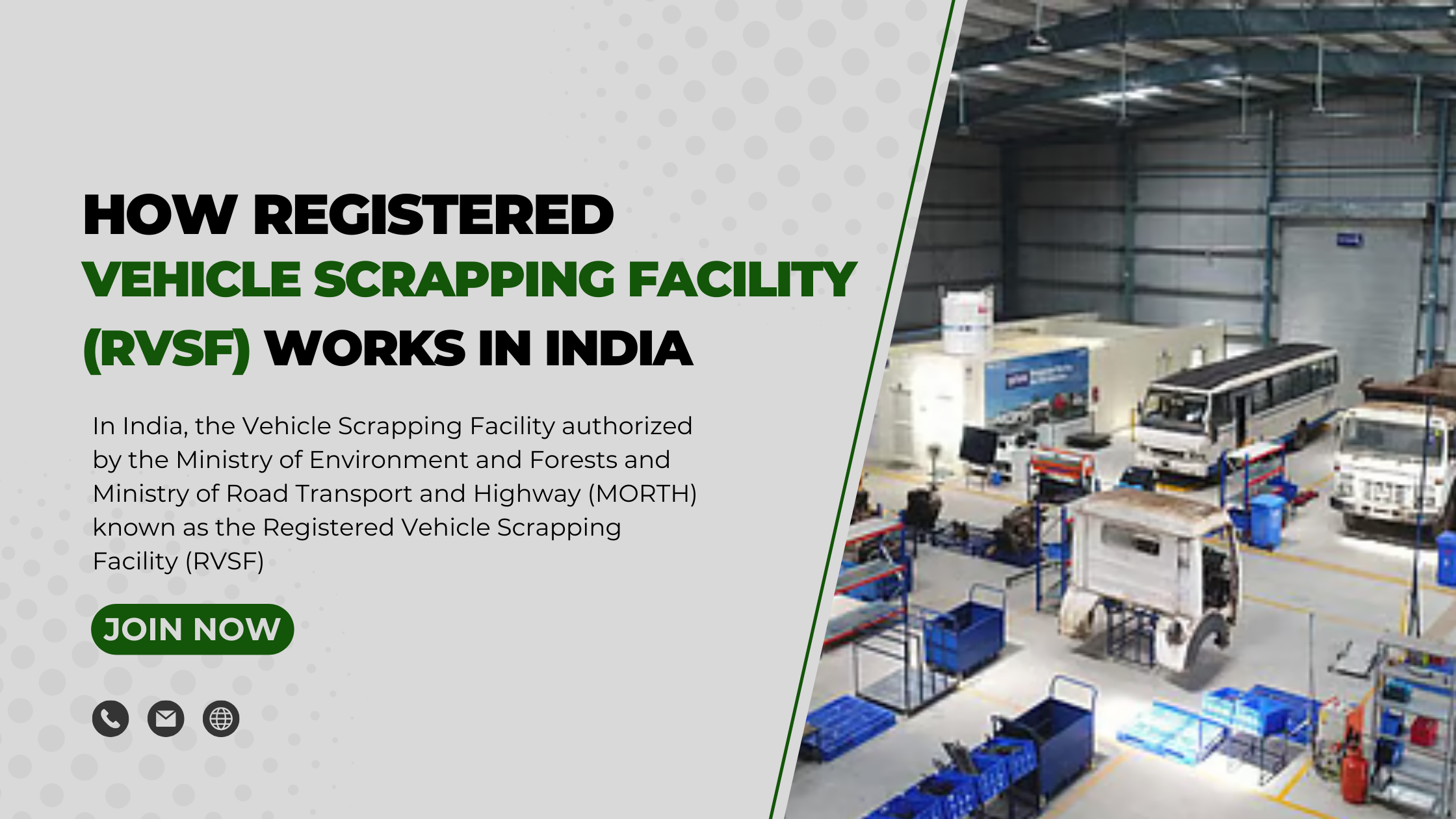
How Registered Vehicle Scrapping Facility (RVSF) works in India
Read More
What EPR E waste Management rules says
Read More
What Tyre Waste Management Rules Says
Read More
What is EPR Battery
Read More