
- Consent
from PCB
- Annual
Return Filing
- Complete Documentations
- Company
Registration
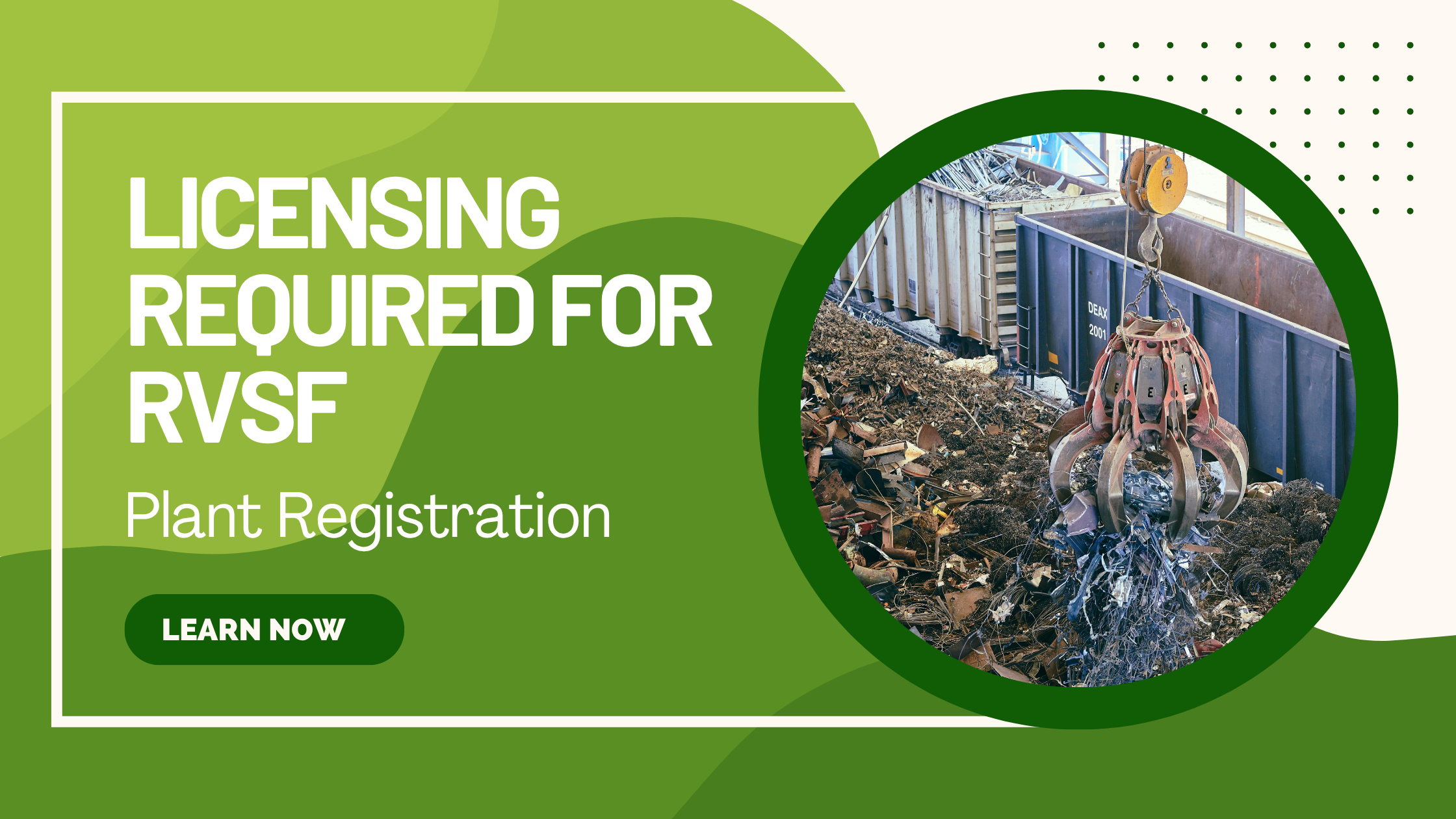
In India, setting up an RVSF (Registered Vehicle Scrapping Facility) or AVSF (Authorized Vehicle Scrapping Facility), commonly known as a vehicle scrapping plant, requires obtaining multiple regulatory approvals and licenses. These approvals ensure that the facility operates in compliance with environmental and safety standards.
Enviroxperts provides complete support in managing the licensing process, including assistance with NOCs (No Objection Certificates) and preparation of required documentation. This includes support for preparing key reports and filing applications with the relevant authorities.
This includes support for:
- Preparation of Detailed Project Report (DPR)
- Environmental Management Plan (EMP)
- Filing of Consent to Establish (CTE) and Consent to Operate (CTO) from State Pollution Control Board (SPCB)
- Hazardous Waste Authorization (HWM)
- Registration with Ministry of Road Transport and Highways (MoRTH)
- EPR (Extended Producer Responsibility) filing with Central Pollution Control Board (CPCB)
How to run RVSF Plant
Establishing an RVSF plant presents an excellent business opportunity. The Ministry of Environment & Forest and Climate Change, along with the Central Pollution Control Board, has introduced a good business model for the current times. Under this framework, you are not required to perform the actual recycling process yourself; instead, your primary responsibility involves segregating the various types of materials from Scrap Vehicles, such as ferrous and non-ferrous metal scraps (aluminum, iron, copper, steel), e-waste, plastics, discarded tires, used batteries, and waste oil.
Once segregated, these materials must be sold to authorized recyclers or manufacturers. In this manner, within a vehicle scrapping plant, you can sell scrap extracted from the vehicles on record, a process that not only benefits the RVSF (Registered Vehicle Scrapping Facility) itself but also ensures the proper collection of GST on these transactions. Essentially, this means that for a 15-year-old vehicle slated for scrapping. You can dismantle it, segregate its components into ferrous and non-ferrous metal scrap, and then sell these parts at current market rates.
How to set up RVSF Plant
To establish a vehicle scrapping facility, you are required to possess a minimum of 2 acres of land; this land must be designated as either industrial or non-agricultural. In accordance with the RVSF policy, the facility must be equipped with a specific list of machinery, including hydraulic cylinders, lift jacks, bailers, and a dedicated tank for collecting fluids. Furthermore, you must designate separate storage areas for segregating and storing the various hazardous and non-hazardous waste materials extracted from the vehicles.
A vehicle scrapping facility is mandated to crush the engine extracted from each vehicle and sever its chassis frame in the middle. The facility must maintain a detailed record of this process and submit a corresponding report to the Transport Department (under MORTH), thereby enabling the department to proceed with the cancellation of the vehicle's registration number.
How Enviroxperts can assist you
As mentioned earlier, establishing such a facility requires obtaining specific approvals from the State Pollution Control Board. Subsequently, you must ensure full compliance with all Environmental, Health, and Safety (EHS) regulations, followed by obtaining registration from the Transport Department. If you require any assistance regarding licensing or approvals for setting up a vehicle scrapping facility, whether related to State Pollution Control Board approvals, Transport Department registration, or detailed compliance report, you are welcome to connect with Enviroxperts team, our environmental compliance team.
Requirement for maintaining records for every scrap vehicle
Once your vehicle scrapping plant becomes operational, you must maintain a proper record for every vehicle processed. This record entails documenting the specific types and quantities hazardous and non- hazardous waste recovered from each vehicle, which must be duly maintained in your internal records. Furthermore, you are required to maintain a record of the authorized recyclers or manufacturers to whom you subsequently sell these hazardous and non-hazardous materials.
The reason behind maintaining these records at the vehicle scrapping facility is rooted in the regulations of the Central Pollution Control Board (CPCB). Should your facility undergo an inspection, whether quarterly, semi-annually, or annually, the concern department will invariably cross-verify whether you are fulfilling the responsibility entrusted to your vehicle scrapping unit by ensuring that the recovered scrap is being handed over to legitimate and appropriate entities that is to the authorized recyclers, processing units or ,manufacturers.
1. What is the difference between RVSF and AVSF?
RVSF (Registered Vehicle Scrapping Facility) and AVSF (Authorized Vehicle Scrapping Facility) are both approved setups for vehicle dismantling and scrapping. The main difference lies in registration and authorization processes, but both are required to follow the same compliance and environmental guidelines.
2. Is AVSF registration required for vehicle scrapping plant setup?
Yes, AVSF registration is mandatory for operating a vehicle scrapping plant. Businesses must obtain approvals from concerned authorities to legally dismantle and process end-of-life vehicles.
3. What approvals are required for RVSF plant registration?
For RVSF plant registration, approvals are required from State Pollution Control Board, Central Pollution Control Board, and MoRTH. Proper documentation and compliance are essential before starting operations.
4. Can a vehicle scrapping facility operate without RVSF approval?
No, operating without RVSF or AVSF approval can lead to penalties, closure, and legal issues. Proper registration is required to ensure compliance and smooth functioning.
5. What is the role of vehicle scrapping facilities in recycling?
A vehicle scrapping facility is responsible for dismantling vehicles and segregating materials like metal, plastic, batteries, and tyres, which are then sent to authorized recyclers.
6. Is EPR applicable for AVSF plants?
Yes, EPR (Extended Producer Responsibility) is applicable in certain cases where proper waste management and reporting are required as per CPCB guidelines.
7. How long does it take to get RVSF approval?
The timeline depends on documentation, inspection, and approval process, but with proper guidance, it can be completed efficiently.
8. What are the benefits of setting up an AVSF plant?
It provides a profitable business opportunity, ensures proper waste management, supports recycling, and contributes to environmental sustainability.
Related Blogs
Who are Enviroxperts and How They Help Businesses with Environmental Compliances?
Read More
How to Get an E-Waste License in India? A Complete Guide
Read More
Complete Guide to EPR Registration in India
Read More
How to Import Scrap Batteries in India and its Rules, License & Compliance Guide
Read More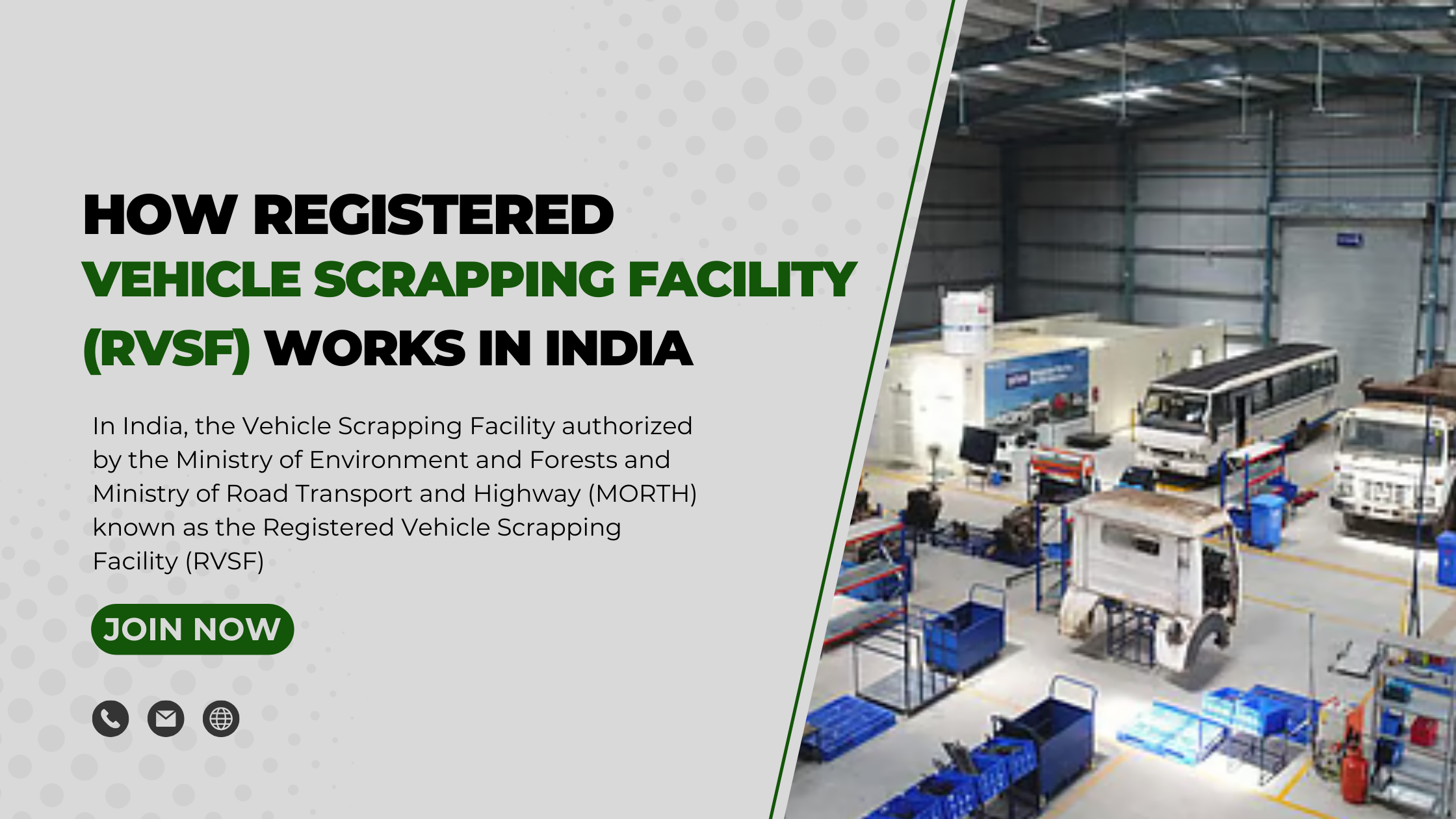
How Registered Vehicle Scrapping Facility (RVSF) works in India
Read More
What EPR E waste Management rules says
Read More
What Tyre Waste Management Rules Says
Read More
What is EPR Battery
Read More