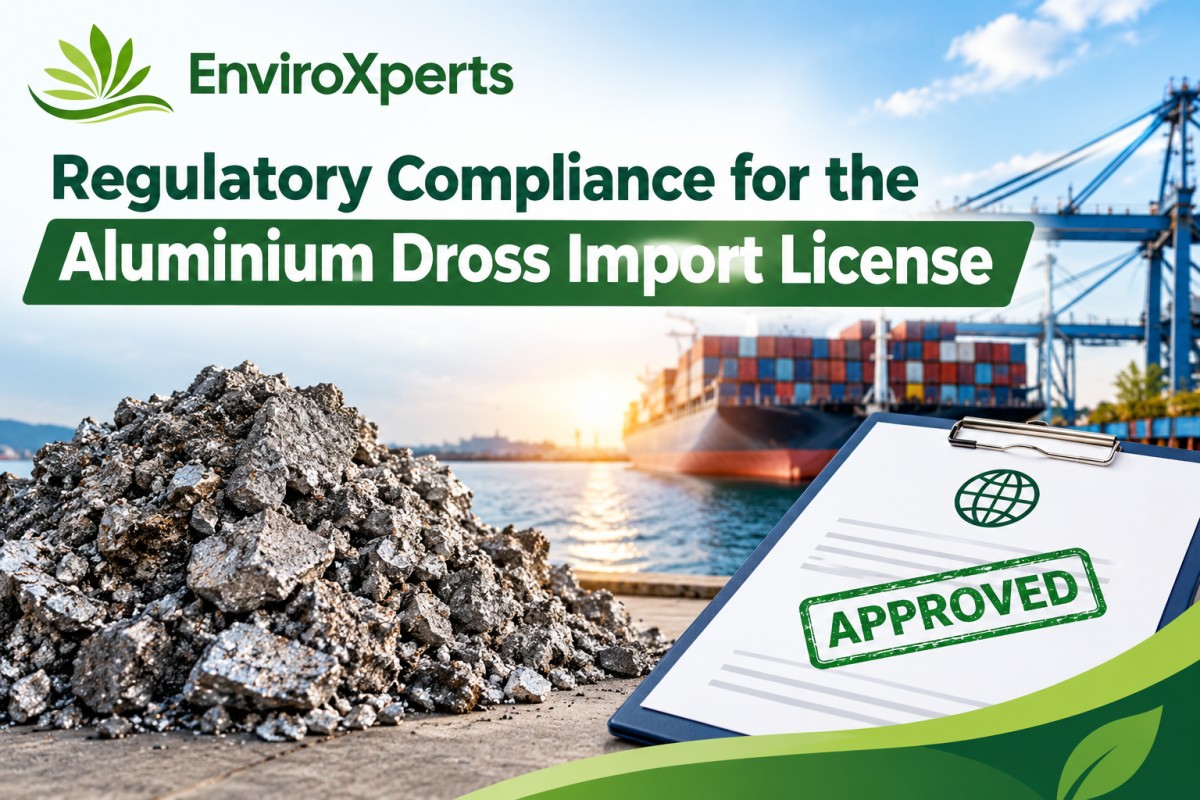
Regulatory Compliance for the Aluminium Dross Import License
26 Oct 2026 | EnviroxpertsGet the complete details on the regulatory compliance related to the import of Aluminium dross. EnviroXperts is a renowned consultancy for documentation and approval compliance for an aluminum dross import license.

- Consent
from PCB
- Annual
Return Filing
- Complete Documentations
- Company
Registration
India is exploring new dimensions in the recycling of non-ferrous metals like aluminium. Aluminium is one of the most recycled non-ferrous metals. Recycling aluminium scrap, dross, and industrial residues is a sustainable solution with a valid aluminium dross import license. Recycling of the dross conserves the natural aluminium reserve. Aluminium scrap recycling starts with the collection of the waste material. Next steps involve the precise sorting, processing, melting, and refining of the aluminium scrap. Aluminium is one of the best recyclable minerals, and aluminium scrap is recycled using the aluminum smelting process. Aluminium Dross recycling can boost the circular economy and promote sustainable development in India.
What is Aluminium dross and how to get it?
As we all know, during the process of smelting, aluminium scrap is melted, and aluminium reacts with oxygen to form an oxide layer. This oxide layer traps metallic aluminium in it along with some other impurities. This is collectively called aluminium dross. Aluminum dross consists of both metal and non-metal. Aluminum dross contains residual aluminium and aluminium oxide, and simple mechanical recycling processes, like crushing, grinding, screening, and sieving, can be used to get the metallic aluminium from the aluminium oxide.
Every year, the aluminium industry across the globe generates a large amount of aluminium dross. Recovering the aluminium from the dross significantly reduces resource wastage. Recycling facilities must adhere to safe recycling techniques. This reduces resource wastage and protects the environment.
Aluminum dross contains residual metals like alumina, nitride, carbide, salt, metal oxide, etc. It forms an oxide film structure over metallic aluminum. It is physically expelled away from the liquid aluminum. It is a blend of metallic aluminum entangled in alumina and salt transitions utilized in smelter plants. Rotary Salt Furnace Technology, Plasma Technology, along with mechanical separation, are the techniques used for aluminium dross recycling.
Types of Aluminium Dross
There are mainly two types of aluminium dross recovered after the primary recycling of aluminium scrap.
- White dross
- Black dross
White dross- This is also called the Non-salt dross. White dross contains a high percentage of aluminium oxide and metallic aluminium. It is derived from essential and optional aluminum flux. It consists of fine powder separated from the liquid aluminum. White dross is produced during the primary fabrication process of aluminium. It has a silvery and reflective appearance.
Black dross—This is also called salt-containing dross. This type of dross is a mix of aluminum oxides and slag and is recovered when salt fluxes are used during melting in secondary aluminium recycling. Black dross has a high recoverable aluminum content and a high salt content. Appearance: Dark gray or black, powdery or granular.
The aluminum dross having a low amount of metal composition of 5 to 20 % of total weight is called secondary dross. This category of dross contains high amounts of salt and gas expansion compared to the compact or primary dross. The higher the amount of metallic aluminium in the dross, the lower the bulk density because the specific gravity of the aluminium metal is lower than aluminium oxide (Al₂O₃).
Documents Required for Aluminium Dross Import License
Regulatory authorisations are required for recyclers and traders to import aluminium dross from foreign markets. The Non-Ferrous Metals Import Monitoring System (NFMIMS), regulated by the Ministry of Mines, allows importers to import aluminium dross/scrap with proper online application submission for the import of items. Upon submission of online data/information, the system will generate an automatic unique Registration Number (URN). This number is sent to the IEC code holder. Aluminium dross falls under the restricted tariff classification; hence, it requires a DGFT restricted import license.
List of documents includes:
ITC (HS) classification
- Import Export Code (IEC) issued by DGFT
- DGFT import license
- MoEFCC approval
- SPCB/PCC authorization or consent
- Form 6 (Movement Document)
- Pre-shipment inspection certificate
- Chemical analysis report
- Commercial invoice, packing list, bill of lading, insurance
- Basel Convention consent (if applicable)
- Annual return filing with SPCB (Form 4)
Is MoEFCC Permission Required to Import Aluminium Dross?
MoEFCC permission is not necessarily required for every category of aluminium dross. The government committee under the Basel Convention category B1100 identifies aluminium dross and dross residue. This allows import and export without MoEFCC permission when authorised under the Hazardous and Other Wastes (Management and Transboundary Movement) Rules, 2016, and mandatory customs verification requirements.
The relaxation of MoEFCC permission depends on the aluminium dross composition, source, salt content, etc. Recyclers and importers should also check the current DGFT Import Policy and applicable customs requirements before arranging a shipment.
Benefits of Aluminium Dross Import License
Aluminium dross is a very reactive material, and in contact with water it releases hydrogen gas, which is very inflammable. Many hazardous gases are released from dross; hence, regulated import of aluminium dross becomes indispensable.
Protection from harmful gases: Inadequate processing can release ammonia, hydrocarbons, and poisonous gases. With a valid license, recycling facilities ensure safe recycling of the aluminium dross.
Helps recover valuable materials – Aluminium content in the dross can be recovered and reused to save money on new raw materials.
Boosting circular economy – The recovered aluminium goes back into the manufacturing process rather than being obtained anew through mining and smelting.
Allows staying within the law – Because dross is hazardous waste, the right treatment and disposal prevent companies from getting fined.
Controlled dumping: Without valid approval, wastes will be dumped in open areas, causing effects to the local communities in case of importation in a free manner. Hazardous waste management rules ensure controlled dumping of the waste material.
Conclusion
Aluminium dross import is guided by the DGFT restricted import license and regulated by the hazardous waste management rules. Businesses ensure that the recycling process of aluminium metal recovery is an environmentally sustainable practice. EnviroXperts is a renowned regulatory and aluminium dross import license consultancy firm providing step-wise details for the registration process and the Aluminium Dross HWM rules. This allows recyclers, traders, and businesses to import aluminium dross and recycle it at their well-equipped recycling facility. Aluminium dross imports could be a high-profit and sustainable business opportunity with proper planning and approvals.
Accelerate your recycling business with growth and give a sustainable future with EnviroXperts.
Related Blogs

Who are Enviroxperts and How They Help Businesses with Environmental Compliances?
Read More
How to Get an E-Waste License in India? A Complete Guide
Read More
Complete Guide to EPR Registration in India
Read More
How to Import Scrap Batteries in India and its Rules, License & Compliance Guide
Read More
How Registered Vehicle Scrapping Facility (RVSF) works in India
Read More
What EPR E waste Management rules says
Read More
What Tyre Waste Management Rules Says
Read More
What is EPR Battery
Read More