
- Consent
from PCB
- Annual
Return Filing
- Complete Documentations
- Company
Registration
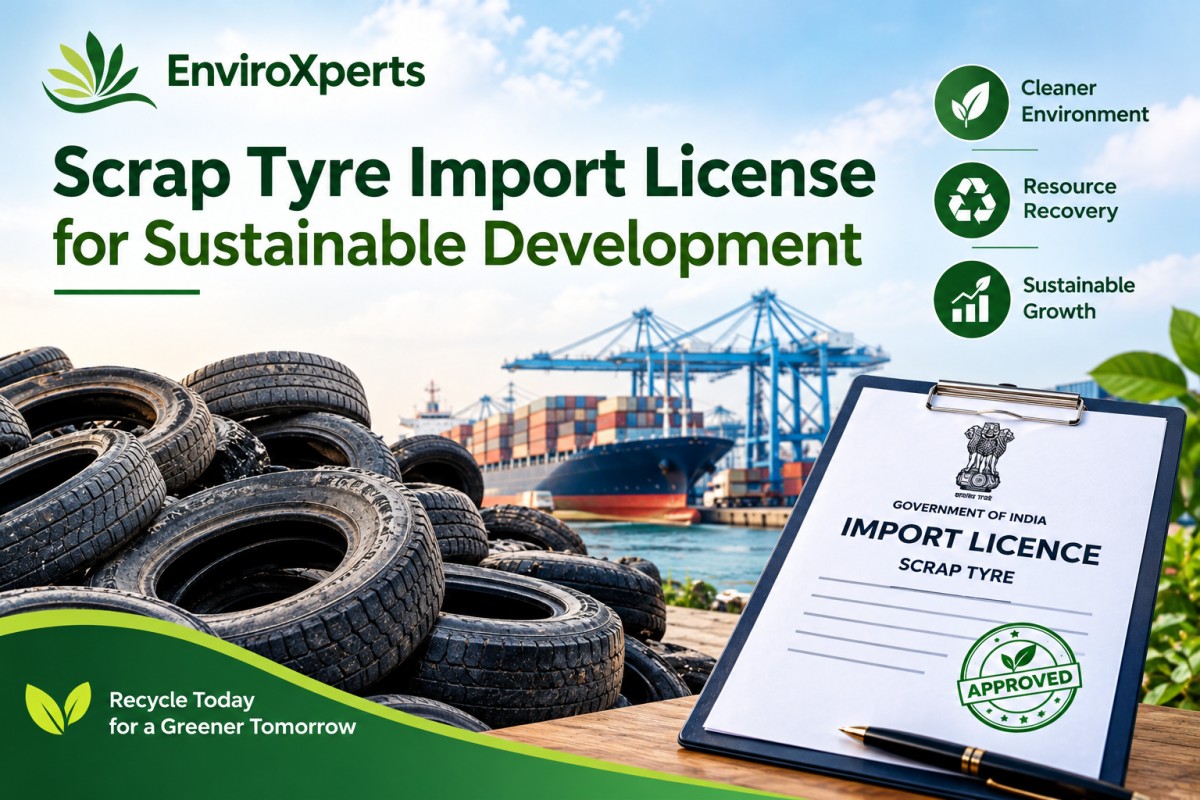
India has strict environmental regulations for scrap tyre import. Unregulated rubber and scrap tyre recycling plants can cause severe damage to both the environment and human health. Recycling facilities dealing in Scrap tyre import need a valid Scrap tyre import license in India issued by the concerned authorities of the government.
This is a crucial measure to prevent the emission of carcinogenic gases, polycyclic Aromatic Hydrocarbons (PAH), dioxins, furans, and oxides of nitrogen. Structured recycling of tyres presents a unique opportunity to boost the circular economy and reduce dependence on imports of
key raw materials. This conserves natural resources and promotes sustainable development.
What are scrap tyres?
The automotive industry has seen a rapid expansion along with global industrial growth. Every year, thousands of tons of tyres end up as a discarded commodity. These tyres are worn out and have reached end-of-life (EOL). The rubber of the tyre undergoes friction, heat, and aging. Rubber is about 80% of the tyre mass, and other layers are made of steel belts and textile overlays. During the recycling process, these layers are to be separated from the rubber for proper recycling.
Scrap tyres accumulate in large numbers and can cause a major threat to the environment. Recyclers import the scrap tyres and recycle them to conserve natural resources. These recycled tyres can be used in cement mixtures and asphalt mixtures.
Steps used by recyclers in the scrap tyre recycling process-
Recyclers follow multiple steps in the recycling of scrap tyres to transform them into useful material and reduce the harmful impact of rubber on the environment. With a valid scrap tyre import license in India, recyclers follow these steps:
Rubber Shredding
This is the first step in the tyre recycling process. Recyclers shred the rubber using a tyre shredder or a rotary shear shredder machine. This step shreds the tyres into strip-like pieces, and the steel-belted portion from the tread part of the tyre is removed.
Steel and Textile Fibres Removal
In this process, the shredded strips of the tyre are converted into small granules using a granulator. Magnets are used in the granulator to remove the small steel fibres from the strips. Wind sifters, shaking screens, and low vacuum suction pipes are used at different stages to remove the polyester fibres. Finally, the granulated rubber is crushed into coarse powder for utilisation in various areas.
Cryogenic Grinding Technology
Textile fabric and steel are removed from the tyres when they are subjected to very low or cryogenic temperatures. The temperature in this process goes as low as -80 degrees centigrade to -120 degrees centigrade. The cooling process makes the tyre brittle and hard like glass. Now these granules are crushed in special mills. Large Recycling facilities and tyre manufacturers use this method, as it is quite expensive technology.
How does recycling scrap tyres support sustainability?
Fulfill EPR targets
Registered recycling facilities with a valid scrap tyre license can support a holistic approach towards sustainable development. Government bodies require tyre producers and importers to meet EPR targets.
Environmental Benefits
Recycling ensures that scrap tyres are not dumped in landfills or burned in open spaces. This ensures better environmental health.
Economic Opportunity
Recovered products such as rubber granules, steel, pyrolysis oil, and carbon black have strong demand in construction, manufacturing, and energy sectors.
Scrap tyre recycling enhances green credits and reduces the carbon footprint. helps boost ESG scores and strengthens credibility with global partners, investors, and regulators.
By-products of Recycled scrap tyres:
Crumb Rubber
This by-product of the recycling process is used in designing running tracks, gymnasium flooring, impact-absorbing flooring, road construction, and rubber moulded products like tiles, mats, and bumpers.
Tyre Pyrolysis Oil (TPO)
Under the EPR for tyre waste 2022, there is a prohibition on the import of waste tyre for producing pyrolysis oil or char. Actual users with mandatory approvals can recycle the imported scrap tyre to get end products other than Tyre Pyrolysis Oil.
Recovered Carbon Black (rCB)
Carbon black is a product of pyrolysis. It can be used in rubber compounding and coatings applications. Recycling facilities with proper registrations can produce carbon black or char but cannot import waste or scrap tyres for this purpose.
Steel Wire and Textile Fibre
The steel bead wire and belt layers in tyres are separated during shredding and sold as steel scrap.
EPR Rules for Scrap Tyre Import:
Extended Producer Responsibility (EPR) for scrap tyres focuses on enforcing tyre manufacturers, importers, and retailers for safe disposal of tyres once they reach the end of their useful life.
As per the Waste Tyre EPR guidelines, import of waste tyres for producing pyrolysis oil or char is prohibited.
CPCB has revised the Standard Operating Procedure (SOP) for the recycling of scrap tyre imports. It focuses on the improvement of environmental performance of recycling units of scrap tyre and rubber across the country. The government has circulated the revised guidelines to all the State Pollution Control Boards (SPCBs)/Pollution Control Committees (PCCs) for immediate implementation.
EPR rules for scrap tyres are governed by the Hazardous and Other Wastes (Management and Transboundary Movement) Rules, 2016. Extended Producer Responsibility (EPR) rules for manufacturers and importers state that scrap tyres must be recovered, recycled, and treated as a resource using modern recycling methods. Producers, recyclers, and manufacturers must register at the CPCB waste tyre portal.
The government, in a bid to reduce the adverse effects of waste tyres, imposes an EPR obligation of 100% of the quantity of tyres imported by the producer or recyclers.
India's Ministry of Environment, Forest and Climate Change (MoEFCC) and the Central Pollution Control Board (CPCB) have heavily tightened the rules on scrap tyre imports.
Key features of the EPR framework in India include:
EPR framework, as established by the MoEFCC, mandates the EPR credit model. Producers and manufacturers can buy EPR certificates from a registered, reliable recycling facility and fulfill their EPR obligations.
Documents Required for Rubber and Scrap Tyre Import License
Given below are the necessary documents for securing a valid scrap tyre import license in UP, Rajasthan, Gujarat, and all over India.
-
Documents for CPCB recycler registration
- Import Export Code (IEC)
- GST Certificate
- PAN card
- CTO issued by SPCB
- Recycling facility permanent address proof
- Business Registration Documents
- Pollution Control Board Approval
- Environmental Compliance Documents
- Other supporting documents as required
- Pre-shipment inspection certificate
A Scrap Tyre Import License is issued by the Directorate General of Foreign Trade (DGFT). This license assures that all the necessary compliances are satisfied by the recycling firm, thus preventing illegal scrap tyre recycling in India.
EnviroXperts is one reliable firm assisting recycling facilities and producers in satisfying the regulatory guidelines by DGFT, CPCB, and MoEFCC regulations.
-
Documents for scrap tyre Import license
Import of scrap tyre is monitored by the Hazardous and Other Wastes
(Management and Transboundary Movement) Rules, 2016. Here is a consolidated list of documents mandated by MoEFCC to get the scrap tyre import license.
- Applicant facilities must fill the Form 5 of Hazardous and Other Wastes (Management and Transboundary Movement).
- Justification of Import provided by the recycler
- Consent to Operate issued by SPCB
- Authorisation letter issued by the concerned SPCB
- Layout and process flowchart of the plant
- Proof of registration from the concerned SPCB
- EPR Registration as a producer on CPCB portal
Why Choose EnviroXperts?
Startups and new facilities getting into the recycling business may find it difficult to understand the complex framework of scrap tyre import regulations. EnviroXperts can provide complete support for securing a scrap tyre import license.
Whether you are an established business or a new entity. Our team of experts can assist you with comprehensive details of the required documents to satisfy the compliance requirements of the SPCB or CPCB. Set up a recycling facility in UP, Haryana, Gujarat. Rajasthan and import waste tyres with a valid license.
EnviroXperts can connect you with tyre manufacturers, recyclers, and other technology vendors to import the scrap tyre.
Recyclers can comply with EPR targets and also explore a new revenue stream with EnviroXperts.
Conclusion:
Scrap tyres can be a significant source of raw material for the rubber industry, as the rubber used in the manufacturing of the tyres is of premium quality. The recycling sector in India is substantial, and the rubber recycling policy of the Indian government lays strong focus on the manufacture of crumb and recovered rubber.
Registered recycling facilities can generate profits from recycling scrap tyres imported from developed nations. It is very important for recycling facilities to comply with the guidelines and pave a path for a value-added recycling process.
EnviroXperts is a one-stop solution for all your queries regarding scrap tyre import licenses in India (and other states like UP, Haryana, Delhi, Gujarat, Rajasthan) and other related documents. Meet all your regulatory compliance requirements and stay ahead of your competitors.
Related Blogs
Who are Enviroxperts and How They Help Businesses with Environmental Compliances?
Read More
How to Get an E-Waste License in India? A Complete Guide
Read More
Complete Guide to EPR Registration in India
Read More
How to Import Scrap Batteries in India and its Rules, License & Compliance Guide
Read More
How Registered Vehicle Scrapping Facility (RVSF) works in India
Read More
What EPR E waste Management rules says
Read More
What Tyre Waste Management Rules Says
Read More
What is EPR Battery
Read More