
- Consent
from PCB
- Annual
Return Filing
- Complete Documentations
- Company
Registration
E-Waste Recycling Plant Setup License
The year 2026 can be seen as a year of semiconductor revolution in India, with the government's flagship India Semiconductor Mission in action. The government is giving a great thrust to setting up semiconductor plants and making India self-reliant in semiconductor needs. Getting started in this sector needs a valid E-waste recycling plant setup license and a reliable consultancy firm that help you streamline the process. With opportunity comes the responsibility of recycling, and the E-waste recycling plant setup licence in India certifies your business to create an impact in this booming sector.
What is E-waste and its recycling?
Electronic waste, or e-waste, is the general term used for the waste generated from all the inappropriately discarded electronic products. E-waste is of great concern in Delhi and NCR due to its effects on the ecological system, which includes humans, animals, plants and other species. There are specified national and international guidelines on E-waste recycling. In India, CPCB develops guidelines for the implementation of various recycling regulations, but businesses fail in effective implementation due to the lack of knowledge and awareness.
Recycling of e-waste is the process of breaking down used as well as unused electronic devices to recover usable materials such as gold, copper, and rare earth metals. This process helps E-waste recycling plants to create a circular economy by turning e-waste into a useful resource for other diverse sectors. Recycling is one potent way of preventing toxic substances from reaching soil or water. Businesses struggle to get an E-waste recycling plant setup license and generate ROI from recycling e-waste. An efficient E-waste recycling plant setup in Delhi, UP, Haryana, Rajasthan, Gujarat, and other regions leading in high-volume e-waste discharge through unorganised sources can significantly reverse the adverse environmental impact.
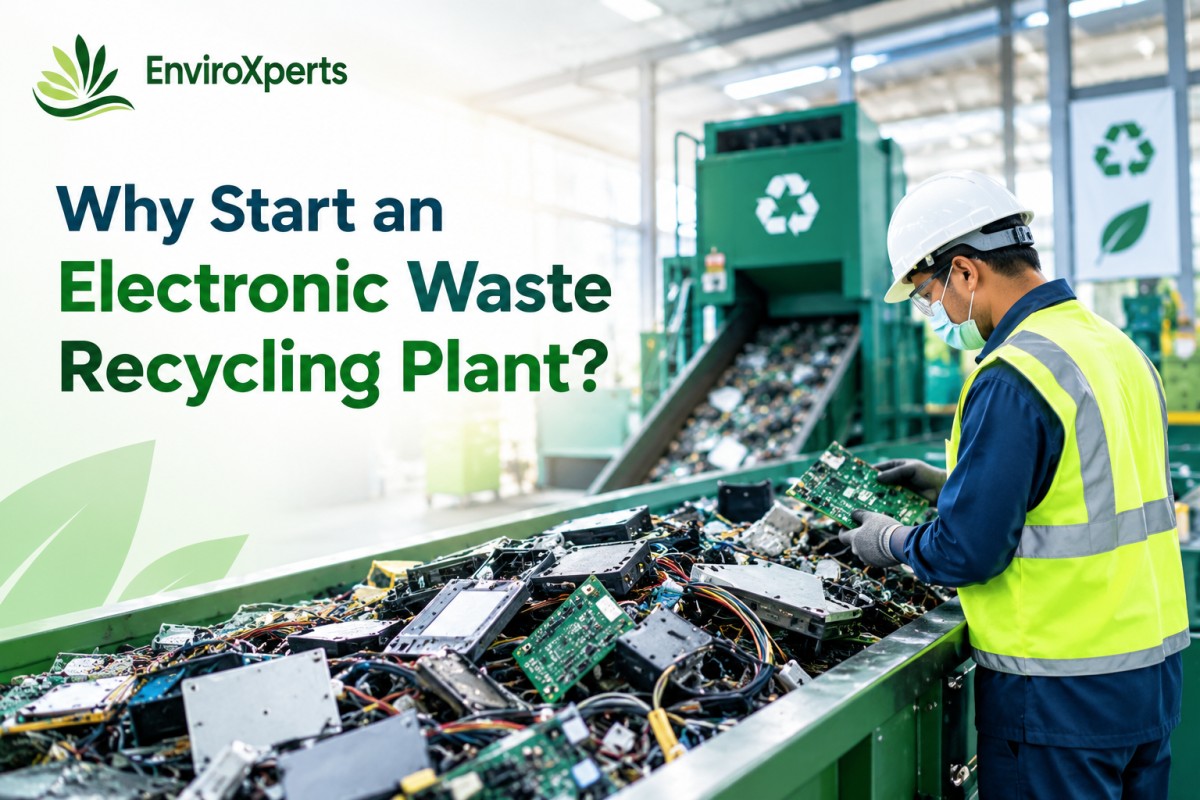
Why Start an Electronic Waste Recycling Plant?
There are multiple factors supporting your idea of riding on the bandwagon of this booming e-waste recycling sector. Given below are some of them:
- Growing Smart Electronics Market – India is one of the fastest-growing economies and also a leading nation in rising e-waste generation. The demand for safe recycling plants is high and is the need of the hour.
- – Environmental protection is a top priority, and a systematic e-waste recycling plant can help in preventing harmful chemicals from contaminating the environment. It is rather a service to humanity along with great financial potential.
- Fast-track regulator – The Government of India has introduced transparent and easy-to-follow guidelines under the E-waste recycling Rules. E-waste recycling plant setup in India has become easy.
- Rising Profits – Metals like gold, silver, copper & rare earth elements are recovered during recycling, making the business profitable.
Steps of E-waste recycling plant setup
-
Assess your business goals
It is the first step towards your journey to a recycling brand. Decide your business model and align your targets. You can become a:
- Collection centre
- Recycling plant
- Refurbishing unit
-
Examine legitimate Licenses and registrations
Getting an authentic license is mandatory before you start recycling e-waste, and it cannot be done without government approval. Here is a list of licenses and registrations you may need:
- Company Registration
- CPCB Authorization
- EPR Authorization
- GST Registration
- Factory License
- Labour Law Registrations
-
Location for plant setup
A recycling plant can be set up only in the area where bulk waste can be properly dumped and managed. Check out the factors given below for area selection:
- Industrial zone
- Regular supply of water and electricity
- Proper access to roads and transport
- Safe distance from residential zones
-
Buy Equipment for Recycling
For recycling, you need machines that break down e-waste into reusable parts. Some essential equipment includes:
- Shredders
- Separators
- Dust extractors
- E-waste furnaces
- Conveyor belts
-
Trained team in recycling
Getting a skilled team can streamline the process. It involves
- Sorting and dismantling
- Chemical handling
- Inventory and logistics
A compliance officer can help in keeping track of safety laws and keeping an eye on workplace safety regulations.
-
Required safety standards
E-waste contains lead, mercury, cadmium, and other toxic elements. So, your plant must not pollute air, water, or soil. You must:
- Install air filters and scrubbers
- Store waste safely in covered areas
- Treat wastewater before release
- Follow CPCB pollution rules
- Keep detailed waste records
- Submit a pollution report to your SPCB or CPCB every year.
-
Build a Market Strategy
Getting a potential client base is necessary, and using modern marketing strategies plays an important role. Target clients from diverse fields like:
- Corporate offices
- Government agencies
- IT companies
- Scrap dealers
- Export houses
Conclusion
E-waste generation has shown higher growth every fiscal year, and generating profit from the booming recycling business depends on the steadfast process of getting a recycling license. It is advisable to connect with experts who possess expertise in regulations and compliance matters related to e-waste licensing. Enviroxperts can provide end-to-end support in getting an authentic e-waste recycling plant setup license and ensure a hassle-free experience for small as well as big businesses.
CTA- Book your E-waste recycling plant setup consultation now. Call us.
Related Blogs
Who are Enviroxperts and How They Help Businesses with Environmental Compliances?
Read More
How to Get an E-Waste License in India? A Complete Guide
Read More
Complete Guide to EPR Registration in India
Read More
How to Import Scrap Batteries in India and its Rules, License & Compliance Guide
Read More
How Registered Vehicle Scrapping Facility (RVSF) works in India
Read More
What EPR E waste Management rules says
Read More
What Tyre Waste Management Rules Says
Read More
What is EPR Battery
Read More