
- Consent
from PCB
- Annual
Return Filing
- Complete Documentations
- Company
Registration
There is a significant increase in the number of electric vehicles (EVs) and other technology equipment using batteries in India. Such batteries require proper management in order to ensure a sustainable future. Scrap batteries could be very useful if they are recovered and recycled through advanced technological processes.
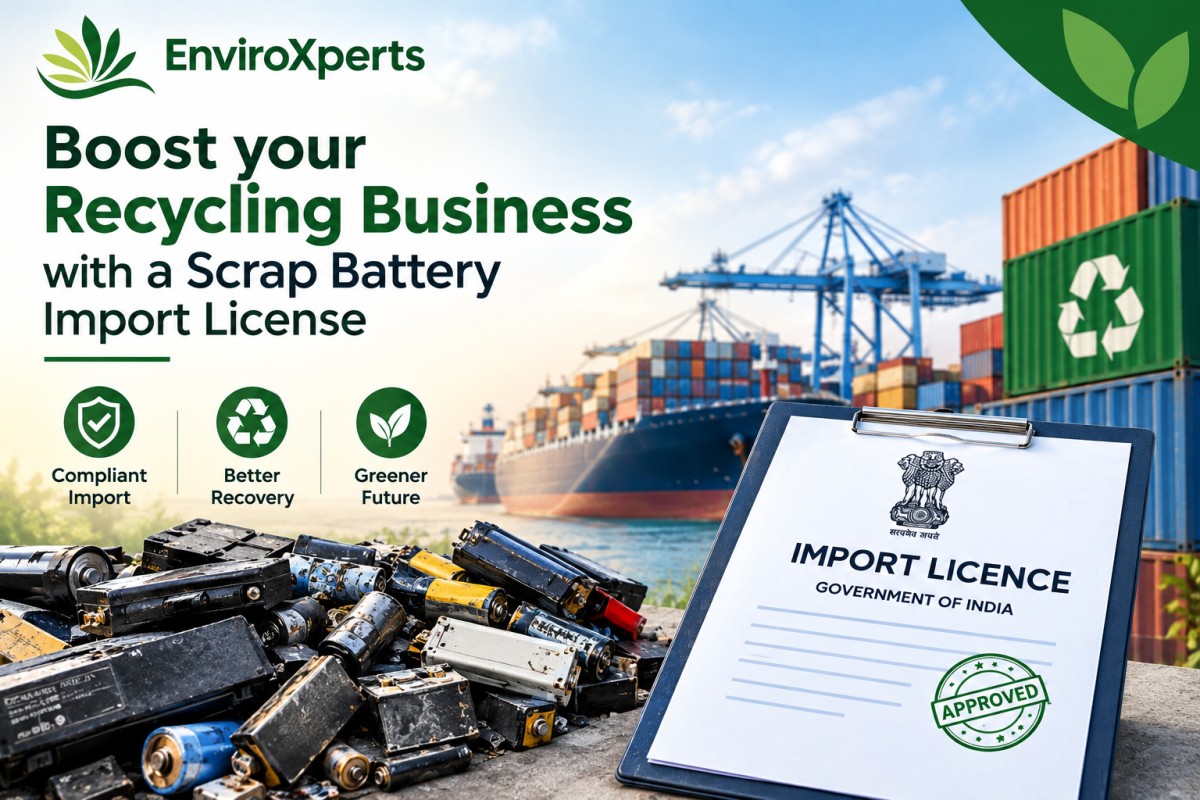
Scrap batteries contain toxic and hazardous chemicals, so there are strictly regulated import permissions for authorised recycling. Recyclers holding a valid scrap battery import license India can import battery scrap and contribute to the creation of a circular economy. There is a well-structured policy in India on importing scrap batteries.
Recyclers extract metals like lithium, cobalt, nickel, graphite, and manganese from scrap batteries and process them for further use.
Recyclers extract metals like lithium, cobalt, nickel, graphite, and manganese from scrap batteries and process them for further use.
What is a Battery Scrap?
Battery scrap is the general term to refer to batteries that are discarded and no longer capable of performing their intended functions. The batteries that have undergone damage or have reached their useful lives and cannot be used anymore are considered battery scrap. Batteries from used electronic items, power tools, or electric vehicles are imported by recyclers holding a valid scrap battery import license to meet the growing industrial demand.
These batteries are imported under strict battery waste import regulations. Businesses involved in the battery scrap import business must follow all the guidelines and get the import license from the Batteries Registration and Management System (BRMS) after registration with the Directorate General of Foreign Trade (DGFT) under the MOEFCC (Ministry of Environment, Forest and Climate Change).
Type of Battery Scrap Import:
Battery scrap imported can be categorised by the type of chemical composition it has. Here are the common types of battery scrap imported:
1. Lead-Acid Battery scrap
Lead-acid batteries are one of the most widely used types of batteries in large-scale applications. These are generally used in automobiles like conventional cars, backup power systems, and industrial equipment.
Lead-acid batteries have lead plates and sulphuric acid in them, and when these batteries reach the end of their lifespan, they can be recycled to recover lead and acid. These are used in new batteries, while the plastic covers are melted down to give shape to new battery casings.
2. Lithium-Ion Battery Scrap
All modern electronic devices use lithium-ion batteries. With the high demand in the EV sector, lithium-ion batteries have become more widely used. These have a high energy density and long lifespan; this makes them ideal for use in EVs. A lithium-ion battery is recycled once it reaches the end of its lifespan (EOL). Recyclers extract valuable materials like black mask, copper, aluminium, lithium, cobalt, nickel, and manganese from the battery. Smartphones, laptops, electric vehicles, and solar storage systems. These recovered metals are used in the production of new batteries and electronic components.
3. Silver oxide and Zinc-Carbon Battery scrap
These are small batteries used in high-precision electronic gadgets like watches and medical devices. Zinc-carbon batteries have twenty percent pure zinc in the outer casing. It is processed and used in the rubber industry. Zinc metal ingots are remelted and used for galvanising steel and creating brass and die-cast alloys.
What is a Scrap Battery Import License?
To import battery scrap in India, recycling businesses need a valid scrap battery import licence. It is an official legal authorisation granted by the government to permit registered recycling facilities to bring discarded batteries into the country. Battery scrap is classified under hazardous waste; hence, it is subject to prior informed consent (PIC) norms, and recyclers need to fulfil the compliances set by the Directorate General of Foreign Trade (DGFT) and the Ministry of Environment, Forest and Climate Change (MoEFCC). Battery scrap is managed under the Hazardous and Other Wastes (Management and Transboundary Movement) Rules, 2016 (HOW Rules 2016). The Basel Convention's mandatory PIC procedure states that competent authorities must approve the shipment before it leaves the origin port.
Regulatory bodies involved in Scrap battery import licensing:
Securing an import license requires a coordinated, step-by-step process to get approvals and fulfil compliance requirements from several major governmental authorities:
DGFT (Directorate General of Foreign Trade): DGFT is the main regulatory body, and it issues the final import license to import applicants. The DGFT license allows the battery scrap shipment to pass through international customs.
MoEFCC (Ministry of Environment, Forest and Climate Change): It is the nodal ministry that reviews applications for scrap import licences. MOEFCC ensures that the imported scrap is as per international standards and matches the criteria set by the Basel Convention safety accords.
CPCB (Central Pollution Control Board): It is the main central board issuing technical protocols and administering battery waste under the Battery Waste Management Rules, 2022 (BWM) These are set to justify EPR targets and get EPR certificates.
SPCB (State Pollution Control Board): It is the main building block for a scrap battery license. It inspects the recycler's physical setup and grants mandatory permissions like Consent to Operate (CTO) and Hazardous Waste Authorisation.
Department for Promotion of Industry and Internal Trade (DPIIT): Recyclers using hydrometallurgical leaching processes that involve highly regulated acids or solvents may require an industrial clearance licence issued by DPIIT.
Essential conditions for a scrap battery import license:
1. Should be an actual user
Traders or third-party middlemen cannot simply buy and hold import licenses for resale. The recycler must own a functional recycling facility. The government will not allow you to bring hazardous waste into the country if you do not have the equipment to process it safely on-site.
2. Import only 1/3rd of the Capacity Cap Rule.
To prevent industrial hoarding, the government regulates the volume of battery scrap imports. Recyclers are allowed to import only ⅓ or 33% of their recycling unit's annual recycling capacity.
3. Extended Producer Responsibility (EPR) protocol
Under the updated Battery Waste Management Rules, any entity introducing battery materials into the domestic market must register on the CPCB Battery EPR Portal. Recyclers generate virtual "EPR Certificates" based on the volume of waste they successfully process, which are then used to meet environmental targets.
|
Condition |
Key Requirement & Description |
|---|---|
|
1. Actual User Status |
Must own an operational recycling facility. Third-party traders/middlemen are not eligible for import licenses. |
|
2. Capacity Cap Rule |
Imports are restricted to a maximum of 1/3rd (33%) of the recycling facility's annual processing capacity to prevent hoarding. |
|
3. EPR Compliance |
Must register on the CPCB Battery EPR Portal and generate EPR certificates based on processed waste volumes. |
Conclusion:
Recyclers and businesses involved in scrap battery import need to fulfil mandatory protocols. This helps them achieve business targets and profits. Non-compliance with the official licensing rules invites penalties and compensation as per the law. EnviroXperts assists recyclers in understanding the complex laws governing the import process. We are a team of experts in scrap battery import licensing. Fast-track your import license process with EnviroXperts and grow your scrap battery import business.
Related Blogs

Who are Enviroxperts and How They Help Businesses with Environmental Compliances?
Read More
How to Get an E-Waste License in India? A Complete Guide
Read More
Complete Guide to EPR Registration in India
Read More
How to Import Scrap Batteries in India and its Rules, License & Compliance Guide
Read More
How Registered Vehicle Scrapping Facility (RVSF) works in India
Read More
What EPR E waste Management rules says
Read More
What Tyre Waste Management Rules Says
Read More
What is EPR Battery
Read More