
- Consent
from PCB
- Annual
Return Filing
- Complete Documentations
- Company
Registration
Introduction
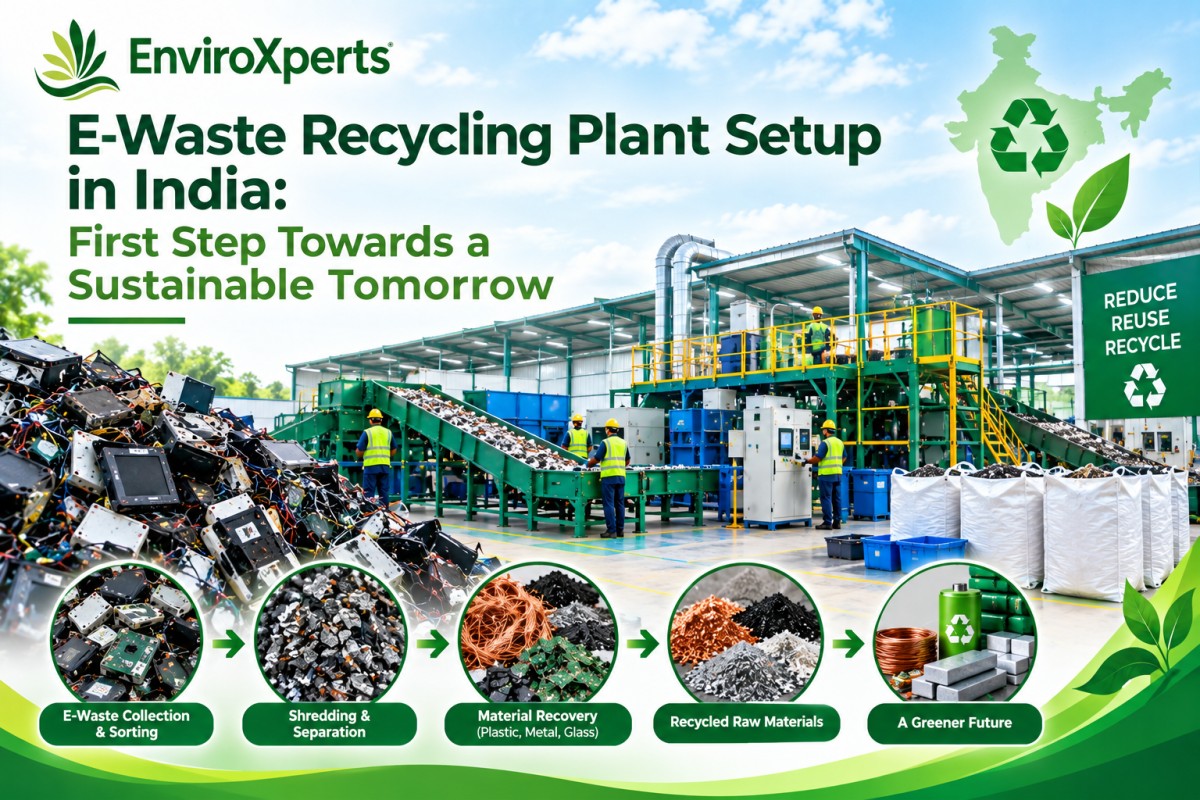
With the launch of the new iPhone, the craze among technology enthusiasts has amplified. This is a race of technology upgrades, and it results in a substantial increase in E-waste. Every problem gives an opportunity; hence, it could be the right time for an E-waste recycling plant setup in India.
E-waste recycling is the process of recovering useful components from the discarded materials and processing them to turn them into useful products. Components from computers, mobile phones, televisions, home appliances, printed circuit boards, cables, etc., are sorted and undergo recycling.
E-waste recycling ensures the safe disposal of unused or hazardous material. Setting up an e-waste recycling plant in India becomes easy when a consultancy streamlines the process. These E-waste advisory firms give end-to-end assistance throughout the process of E-waste recycling plant setup. E-waste recycling protects the environment and boosts the economy as well.
What is E-waste and its components?
Common items categorised as E-waste are components from computers, mobile phones, electronic household appliances, and other medical equipment. When E-waste is mindlessly dumped without recommended guidelines, it releases very harmful substances. These substances adversely affect the environment and lives. Harmful chemical substances like lead, mercury, acids, and other hazardous substances need proper disposal.
Types of E-waste substances:
E-waste is one of the fastest-growing wastes on the globe. Recyclers should have a clear picture of what forms the E-waste and material which is not included in the E-waste list. It can be divided into metals, plastic, and other components depending on its chemical properties and recyclability.
Metal waste:
Metal in E-waste includes waste consisting of copper, aluminium, iron and steel, zinc, and other precious metals. These metals are further categorised into ferrous and non-ferrous. These are recovered from circuit boards, wires, and components. Printed circuit boards have precious metals in their pins and are of the highest value. High-value metals like gold, silver, and palladium are also recovered from E-waste.
Plastic waste:
Plastic waste like electronic casings, plastic cables, pin connectors, keyboards, computers, televisions, and other devices falls under the category of E-waste. Plastics used in electronics have different chemical properties, and unlike metals, these have complex polymer structures. Recycling units take steps like sorting and processing into recyclable plastic products, giving a boost to the circular economy. The plastic waste management rules in India recommend extended producer responsibility (EPR) for businesses.
Benefits of E-waste recycling:
As per strict CPCB recommendations, manufacturers need to follow EPR (Extended Producer Responsibility) rules that make it mandatory to recycle E-waste recovered as per E-Waste Management Rules, 2022.
E-waste recycling has benefits like:
Non-renewable materials conservation:
E-waste recycling helps recover and conserve valuable non-renewable metals that are usually used in circuit boards. After processing, these materials can be used to manufacture new products in various industries or in the same industry. This reduces the need for mining and extraction of new materials and saves non-renewable metals.
Environmental protection:
E-waste contains hazardous substances having severe adverse effects on the environment and humans. With regulated recycling of E-waste, we can prevent these harmful substances from entering the environment and contaminating our ecosystems.
Boost circular economy:
E-waste recycling involves recovering and reusing materials. This minimises the load on the resources to manufacture new products and boosts economic growth. The recycling industry provides employment opportunities for people involved in collection, sorting, and processing e-waste.
Saving the Planet:
E-waste recycling is a sustainable practice and hence helps to protect our planet and future generations. A partnership between user and buyer allows reuse of the recycled products.
Documents required for E-waste recycling plant setup
Businesses need complete authorisation to run an e-waste recycling facility. They need to register both under CPCB (Central Pollution Control Board) and SPCB (State Pollution Control Board). List of licences required:
- Company Registration
- CPCB Authorisation
- EPR Authorisation
- GST Registration
- Factory License
- Labour Law Registrations
- Machinery compliance
- Layout compliance
- Consent to establish
- Consent to operate
Businesses can contact experts from EnviroXperts advisory services and get end-to-end assistance in setting up an E-waste recycling plant in Delhi or any other place in India
Conclusion:
The growing E-waste crisis can be turned into a business opportunity. To reduce E-waste in the environment, setting up an e-waste recycling plant becomes important. New businesses find it cumbersome to navigate the complex process of documentation and compliance in E-waste recycling plant setup in India. EnviroXperts is your compliance monitor.
EnviroXperts is a team of experts committed to helping businesses deeply understand the regulations and compliance related to setting up an E-waste recycling plant in India. Our expertise in e-waste management can assist businesses and startups in developing effective recycling programmes, ensuring proper disposal of electronic devices, and alleviating the adverse effects on the environment.
FAQ For EnviroXperts
1. Q. What is the list of documents for the E-waste recycling plant setup?
Answer:- You would need Company Registration, CPCB authorisation, EPR authorisation, GST Registration, Factory License, Labour Law Registrations, machinery clearance certificate.
2. Q.Give the sequence of steps involved in setting up an e-waste recycling plant? Answer:-Choose a perfect site for your e-waste plant, prepare a layout, get mandatory approvals, and get high-quality machinery installed, along with all the CPCB registrations.
3. Q.Is SPCB approval mandatory for an e-waste recycling plant?
Answer:-Yes, CTE and CTO approvals are given by the respective SPCB. For example, if you are setting up an e-waste plant in Delhi, then SPCB Delhi will issue all the approvals regarding that.
4. Q. How much time does it take to start the operation of an e-waste recycling plant?
Answer:-Once all the regulatory obligations are done, you can start setting up the plant. To make it operational, you need CPCB compliances in check.
Related Blogs
Who are Enviroxperts and How They Help Businesses with Environmental Compliances?
Read More
How to Get an E-Waste License in India? A Complete Guide
Read More
Complete Guide to EPR Registration in India
Read More
How to Import Scrap Batteries in India and its Rules, License & Compliance Guide
Read More
How Registered Vehicle Scrapping Facility (RVSF) works in India
Read More
What EPR E waste Management rules says
Read More
What Tyre Waste Management Rules Says
Read More
What is EPR Battery
Read More