
- Consent
from PCB
- Annual
Return Filing
- Complete Documentations
- Company
Registration
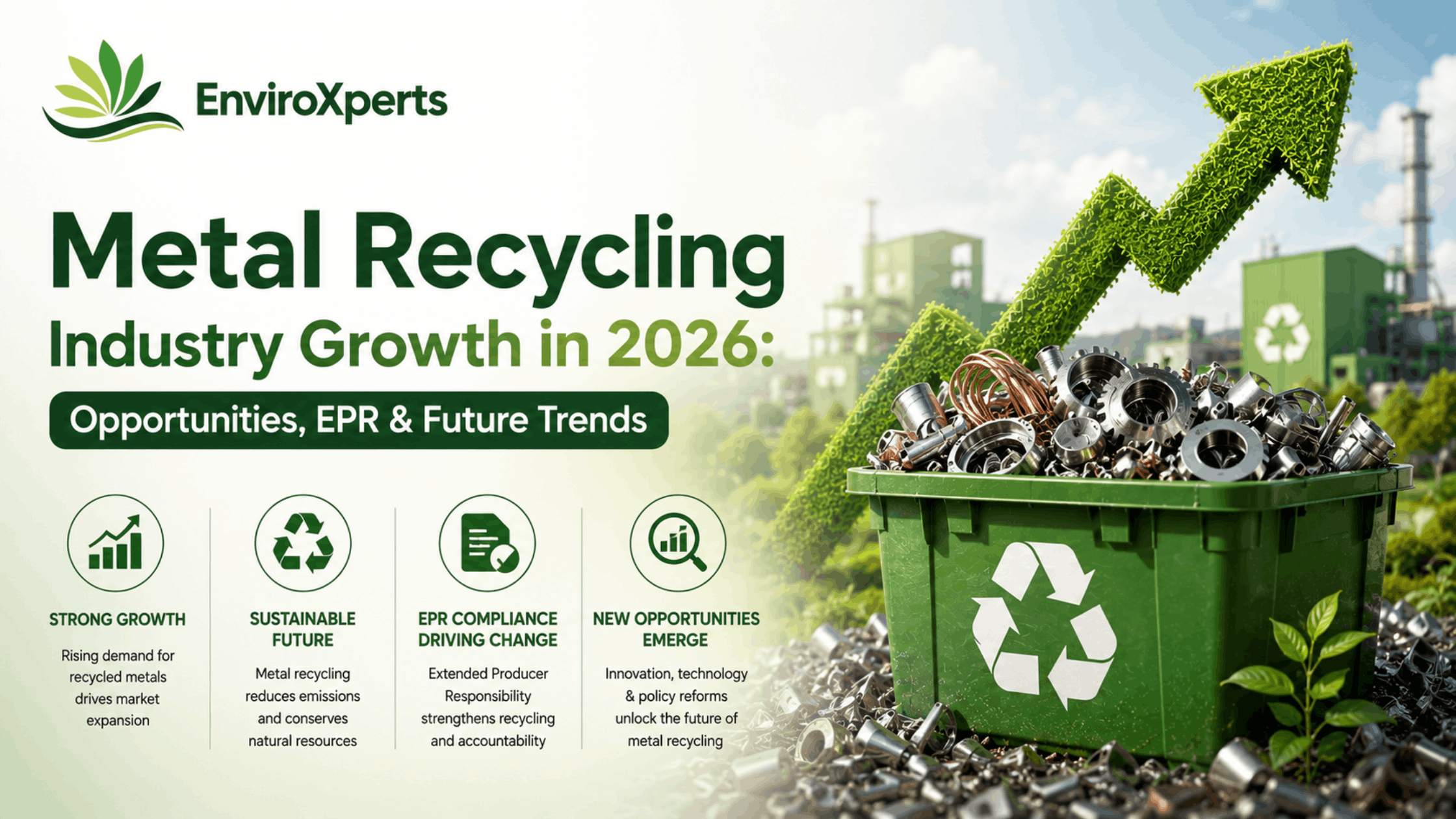
The metal recycling industry is entering a new growth phase as governments and industries focus on sustainable manufacturing and circular economy practices. Increasing demand for recycled raw materials, rising metal prices, and stricter environmental regulations are creating significant opportunities for recyclers across multiple sectors.
Let us understand with an Example - In India , E Waste Recycling , Lithium Ion Battery Recycling such type of Recycling facilities extract the High Value Minerals , Ferrous and Non Ferrous Metal from recycling. These Metal as a real material can be utilised by an Aluminium Recycler, Copper Recycler, Iron Recycler, Plastic Recycler, Steel Recycler in their Recycling unit where they have a setup of furnace and they can make the products like copper Ingot , Aluminium Ingots.
Recent policy developments have further strengthened the industry. The introduction of Extended Producer Responsibility (EPR) for non-ferrous metals and increasing focus on recycled content in manufacturing are expected to boost demand for organized recycling facilities.
Recycled Metal Demand is Rising
Manufacturers and Recyclers are increasingly looking for sustainable raw material sources to reduce dependence on mining and lower their environmental footprint.
Industries using recycled metals include:
- Automobile manufacturing
- Electrical equipment
- Construction sector
- Packaging industry
- Consumer goods manufacturing
- Aluminium Recycler
- Copper Recycler
- Black Mask Refining Industry
- Steel Manufacturers
As sustainability targets become stricter, demand for recycled metal is expected to increase further.
EPR Framework Creating New Opportunities
One of the biggest developments in the recycling sector is the introduction of Extended Producer Responsibility (EPR) mechanisms for non-ferrous metals.Which is introduced by the Central Pollution Control Board and the Ministry of Environment Forest & Climate Change.
Under this framework, manufacturers and producers are expected to contribute toward responsible resource recovery and recycling. This is likely to increase the role of authorized recyclers and create new business opportunities within the metal recycling ecosystem.Along with EPR Credit transfer to their respective PIBO’s.
Why Organized Recyclers Are Gaining Importance
The industry is gradually shifting from unorganized scrap handling toward structured recycling operations.
Organized recyclers offer:
- Better material traceability
- Environmental compliance
- Quality-controlled processing
- Efficient recovery systems
- Improved resource utilization
- Tracking of Waste Properly
- Proper recycling on ground level.
- Proper extraction of Raw Material which supply to the respective Manufacturers.
- Participation in Awareness Programs
This transition is attracting investments into recycling infrastructure and technology.
Growth in Non-Ferrous Metal Recycling
Non-ferrous metals such as:
- Copper
- Aluminum
- Lead
- Zinc
- Tin
are witnessing strong recycling demand due to their high value and widespread industrial applications.
Several recycling companies are expanding their processing capacity and investing in advanced recovery technologies to meet future demand.
Future Outlook for Metal Recycling
Industry experts believe the metal recycling market will continue expanding as governments introduce stricter environmental regulations and industries increase the use of recycled content in manufacturing. In the upcoming time the Recyclers and Manufactures will connect directly and in between trader participation will be removed. It surely helps the recyclers and manufactures work together to fulfill Indian market growth.
With growing demand for sustainable materials and increasing investment in recycling technologies, the sector is likely to remain a key part of the circular economy transition.
How Enviroxperts Can Help
Enviroxperts provides environmental consultancy services for metal recycling projects, approvals, compliance management, EPR-related guidance, and recycling plant setup support.
Our team assists businesses in understanding regulatory requirements and establishing compliant recycling operations for long-term growth.
FAQs
Why is the metal recycling industry growing in 2026?
Growing demand for recycled materials, EPR regulations, and sustainability initiatives are driving industry growth.
What metals are commonly recycled?
Copper, aluminum, lead, zinc, steel, and other industrial metals are commonly recycled.
How does EPR impact the recycling industry?
EPR increases demand for organized recycling and supports responsible resource recovery.
Why are manufacturers using more recycled metals?
Recycled metals help reduce costs, conserve resources, and support sustainability goals.
Is metal recycling a growing business opportunity?
Yes, increasing industrial demand and environmental regulations are creating strong long-term opportunities for the recycling sector.
Related Blogs
Who are Enviroxperts and How They Help Businesses with Environmental Compliances?
Read More
How to Get an E-Waste License in India? A Complete Guide
Read More
Complete Guide to EPR Registration in India
Read More
How to Import Scrap Batteries in India and its Rules, License & Compliance Guide
Read More
How Registered Vehicle Scrapping Facility (RVSF) works in India
Read More
What EPR E waste Management rules says
Read More
What Tyre Waste Management Rules Says
Read More
What is EPR Battery
Read More