
- Consent
from PCB
- Annual
Return Filing
- Complete Documentations
- Company
Registration
Introduction
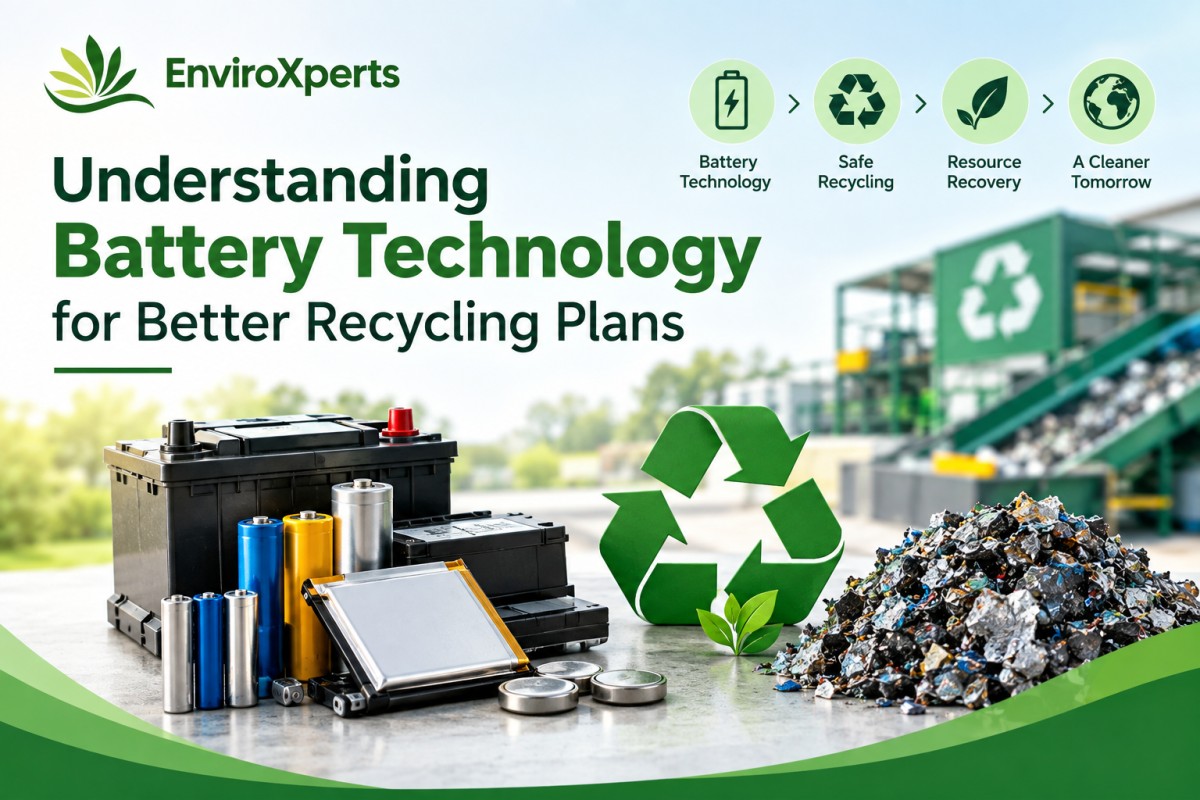
Battery technology requires a detailed study before we dive deep into the details of its recycling process. With the rise in electronic equipment, batteries are everywhere. These are substantial components of the latest electronic gadgets, modern transportation systems, power systems, and industrial applications. The rapid growth of EVs (electric vehicles) has increased the use of batteries. For a sustainable tomorrow, we need a better understanding of battery technology and its recycling process.
What is Battery Technology?
Battery technology is all about the proper functioning of the battery. It describes the process of storing electrical energy in a battery and releasing it when required. A rechargeable battery has components like an anode, cathode, electrolyte, and separator. During the charging and discharging process, ions or electrons move from the negative side of the battery terminal to the positive side, through the electrolyte. When the circuit gets compled ans electron rreaches to cathode, electric current is generated. This happens through two different types of chemical reactions called reduction and oxidation.
Major Types of Battery Technology
All the latest gadgets and devices available have a battery slot. Batteries are driving everything like automobiles, electronic items, telecommunication equipment, industrial equipment, and energy-storage applications. Some of the important types include:
Lithium-ion batteries
Lithium-ion batteries are extensively used in consumer electronics, electric vehicles (EVs), and energy storage devices. These batteries have high energy density and can be reused when charged. The efficiency and lifespan of lithium-ion batteries can be increased by enhancing the cathode material and integrating thermal techniques.
Nickel-Metal Hydride (NiMH):
Hybrid automobiles and portable devices used these days use Nickel-Metal Hydride batteries. They do not offer very high energy density, but they have long life cycles. This makes them durable and long-lasting.
Flow Batteries:
These are perfect for large-scale energy storage systems. These offer high performance, durability, and better grid applications.
Lithium iron phosphate (LFP)
With the exponential rise in EVs, use of LFP has increased significantly. These are the same as lithium-ion batteries, except for their features, as they use lithium iron phosphate as their cathode material. These are known for thermal stability and a longer lifespan. LFP batteries are used for stationary energy storage.
Nickel manganese cobalt (NMC)
NMC batteries use nickel, manganese, and cobalt in the cathode. These are preferred in high-energy applications, as they offer balanced energy density, power, and other performance characteristics. NMC batteries are generally used in electric vehicles and other high-energy applications.
These also contain valuable metals and have high material value after proper recycling.
Lead-acid batteries
Lead-acid batteries have been used for decades in vehicles, backup power systems, telecommunications, and industrial applications. They are relatively established and have a mature recycling chain.
Their heavier weight and lower energy density compared with lithium-ion technology can limit their suitability for applications where weight and compact size are important.
How to Decide on the Best Battery Technology?
Various types of batteries are used depending on the need and their technological features. Before zeroing in on a battery type, here are certain factors to be considered:
• Application
• Energy requirement
• Probable cost of the project
• Safety requirements
• Battery charging requirements
• Expected battery life
• Weight of the battery and Size of the battery
• End-of-life recycling requirements
Battery Recycling Process:
Recycling a used battery is beneficial, as it alleviates the burden on nature. It gives scope for sustainability and increases the circular economy. To recover valuable materials from lithium-ion batteries, there are three major methods used in the battery recycling process. The first step is to disassemble the battery components. Once these are taken out, recyclers go for crushing, shredding, and separating them to get black mass. Black mass is a major element of any recycling process.
Main steps of the battery recycling process include-
- Collection
- Segregation
- Handling
- Storage
- Transportation to recycling unit
- Recycling
- Recovery of useful materials
- Proper management of residues
Battery technology involves recycling various components of the battery. Methods involved are —-
- Smelting process— Smelting is used where a high-temperature is needed for battery component melting. A recycler can reach the required temperature. It involves the thermal treatment of batteries in a furnace to extract metals and their intermediate salts. This process creates battery-grade precursors, which are used in cathode processing facilities. Smelting can melt all kinds of batteries containing lithium-ion. At high temperatures, organic materials, like electrolyte and carbon anodes, get burnt as fuel or reductant. The valuable metals and intermediate salts are recovered and sent to refining storage to make them into a product suitable for any use, including battery-grade processing. Lithium obtained from the process is used as an additive in the concrete.
- Chemical leaching — This is an important part of the hydrometallurgical process and uses a chemical treatment to extract key compounds from the black mass, including lithium compounds. Chemical leaching uses inorganic acid, organic acid, alkali, or even bacterial solutions that dissolve metals in cathodes into salts that can be used as precursors to make new cathodes.
- Direct recycling – This method involves the recovery of cathodes while maintaining the molecular structure.
The type of recycling processes in battery technology depends on the reuse viability and cost-effectiveness.
Battery Technology and Recycling Compliance in India
Battery technology and its waste management are governed by the MoEFCC (Ministry of Environment, Forest and Climate Change) guidelines and Battery Waste Management Rules, 2022. This framework in 2022 included Extended Producer Responsibility (EPR) for waste batteries. This clearly announces the responsibility of the producer, recycler, and refurbisher to get a valid registration under CPCB guidelines. After fulfilling the compliance criteria, battery recyclers get an EPR certificate. This certificate allows businesses to operate battery waste recycling facilities in India.
Conclusion-
Battery technology includes the harmful compounds and heavy metals in batteries. Components like lead, cadmium, and mercury can cause huge ecosystem damage. Recycling facilities need expert assistance in getting a viable recycling system. EnviroXperts provides complete technical requirements and applicable regulatory obligations for battery waste management. You can get detailed knowledge on EPR compliance, recycling plant setup, and environmental compliance.
Get complete Battrey technological layout and recycling guidance with EnviroXperts.
Related Blogs

Who are Enviroxperts and How They Help Businesses with Environmental Compliances?
Read More
How to Get an E-Waste License in India? A Complete Guide
Read More
Complete Guide to EPR Registration in India
Read More
How to Import Scrap Batteries in India and its Rules, License & Compliance Guide
Read More
How Registered Vehicle Scrapping Facility (RVSF) works in India
Read More
What EPR E waste Management rules says
Read More
What Tyre Waste Management Rules Says
Read More
What is EPR Battery
Read More